
15 Camping Breakfast Ideas Worth Waking Up For!
There’s something about breakfast at a campsite that just tastes better. A hot coffee warming your hands as the sun comes up over the trees, bacon sizzling in a skillet, or pancakes cooking while everyone slowly emerges from their tents – it’s one of our favorite parts of a camping morning.
And it doesn’t have to mean a lot of work. These 15 camping breakfast ideas range from overnight oats and quick no-cook options to hearty skillet breakfasts, make-ahead burritos and Dutch oven bakes. Each one includes proper quantities, cooking times and clear instructions, so you can choose something quick before hitting the trail or make breakfast part of a slower morning around camp.
Most of them also get easier with a little prep the night before, leaving you more time to enjoy that coffee and sunrise in the morning.
This post contains affiliate links. As an Amazon Associate, The Avid Campers earns from qualifying purchases. If you buy through one of these links we may earn a small commission, at no extra cost to you.
Coffee First, Everything Else Second
For us, a good camping breakfast starts with coffee. Getting the water on while you’re setting up breakfast means you can have a hot cup in your hands while everything else is cooking – which is a pretty good way to start a morning at camp.
How you make it really comes down to what you enjoy and how many people you’re brewing for. A pour-over is simple and works well when you’re only making a cup or two, while a larger French press or percolator makes more sense when several people are waiting for coffee.
There are plenty of other ways to make a great cup outdoors too. We’ve compared the different options in our guide to the best coffee makers for campers and RVs, including which methods work best for different camping setups.
Food Safety in One Place
Rather than repeating this under every breakfast recipe, here’s the run down: keep perishable food in a cooler holding 40F (4.4C) or below, with a fridge thermometer inside so you always know the true reading, rather than guessing as you go.
Perishables should not sit out for more than two hours, or one hour if it is above 90F. Keep raw sausage and bacon sealed and low in the cooler, away from anything you will eat without cooking.
The cooking temperatures that matter here, from the USDA: egg dishes such as casseroles and French toast 160F, ground meats including breakfast sausage 160F, and anything you are reheating rather than cooking, such as freezer burritos, will need to be hot right through at 165F. Loose eggs are done when the yolk and white are both firm. Individual recipes below mention a temperature only where it varies.
No-Cook Camping Breakfasts
No stove, no fire, no pan. These are the mornings with an early start, or the ones where the weather has turned and cooking outside has lost its appeal.
1. Overnight Oats Jars

Prep: 5 min · Rest: 6 hr or overnight · Serves: 1 per jar
You’ll need:
- 1/2 cup rolled oats
- 1/2 cup milk, or 1/3 cup plain yogurt loosened with 3 tbsp milk
- 1 tbsp chia seeds
- 1 tbsp maple syrup or honey
- Pinch of salt, 1/4 tsp vanilla extract
- 1/2 cup berries or 1 sliced banana
- 1 jar or lidded tub, about 12 oz
At camp: Add the oats, chia seeds, maple syrup, vanilla and a pinch of salt to the jar, then pour in the milk and give everything a good stir. Top with the fruit, seal the jar and pop it into the cooler overnight, or for at least 6 hours. In the morning, give it another stir and it’s ready to eat.
Camp tip: Make the oats directly in the jar you’ll eat from and you’ll have one less thing to wash up. Keep the fruit on top overnight, especially if you’re using soft berries, then mix it through just before eating. Keep the jars chilled at 40°F (4.4°C) or below.
2. Yogurt, Granola and Berry Cups
Prep: 3 min · Serves: 4
You’ll need:
- 3 cups plain or vanilla yogurt
- 2 cups granola
- 3 cups mixed berries
- 4 tbsp honey
- 1/2 cup chopped nuts, optional
At camp: Spoon the yogurt into cups or bowls, add the berries and honey, and put the granola on last, just before eating.
Camp tip: Carry the granola in its own bag and combine at the table. Layered the night before, it softens into the yogurt overnight, which is the difference between this and overnight oats: one is meant to soften, the other is not.
3. Bagels with Cream Cheese and Smoked Salmon

Prep: 5 min · Serves: 4
You’ll need:
- 4 bagels, split
- 8 oz cream cheese
- 8 oz cold-smoked salmon
- 1/2 small red onion, sliced very thin
- 2 tbsp capers, drained
- 1 lemon, black pepper, fresh dill if you have it
At camp: Slice the bagels and spread generously with cream cheese, then add the smoked salmon, red onion and capers. Finish with a squeeze of fresh lemon and a little black pepper.
Camp tip: Keep the salmon well chilled in your cooler until you’re ready to make breakfast. If you can, pack the onion and lemon pre-sliced in small containers so there’s almost no prep to do in the morning – just assemble the bagels and eat.
4. Peanut Butter and Banana Tortilla Rolls
Prep: 3 min · Serves: 4
You’ll need:
- 4 large flour tortillas
- 8 tbsp peanut butter
- 4 bananas
- 2 tbsp honey
- 1 tsp ground cinnamon, optional
At camp: Spread each tortilla with peanut butter, lay a whole banana along one edge, drizzle with honey, dust with cinnamon and roll tightly and enjoy!
Camp tip: Built with shelf-stable peanut butter, honey and tortillas, this breakfast pretty much needs no cooler, though check the labels, since some brands say to refrigerate after opening. It’s a great option to hold back for the last morning of a trip, or for a day when you would rather eat at the trailhead than at the campsite.
One-Pan Hot Breakfasts
A 10- or 12-inch cast-iron skillet works well for everything in this section. It’s particularly handy at camp because the heavy pan holds onto heat well, even when a bit of wind makes your camp stove less consistent.
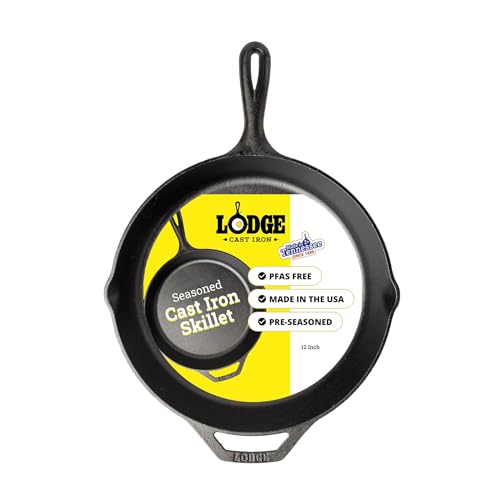
A versatile 12-inch cast iron skillet for campsite breakfasts, one-pot dinners and cooking over a camp stove, grill or campfire.
5. Bacon, Egg and Hash Brown Skillet
Prep: 10 min · Cook: 25 min · Serves: 4 · Gear: 12-inch skillet
You’ll need:
- 12 slices bacon, chopped
- 1.5 lb frozen shredded hash browns, or 1.5 lb potatoes grated and squeezed dry
- 1 onion, diced
- 8 eggs, beaten with 2 tbsp milk
- 1 tsp salt, 1/2 tsp black pepper
- 1 cup grated cheddar and 3 scallions, to finish
At camp: Cook the bacon over medium heat for 6 to 8 minutes until crisp and lift it out, leaving the fat. Add the potatoes and onion in an even layer, season, and leave them alone for 5 minutes before turning, then cook another 8 to 10 until browned and tender. Push everything to one side, pour the eggs into the space and scramble them until just set, then fold everything together with the bacon and finish with cheese and scallions.
Camp tip: Leave the potatoes alone for the first five minutes so they have time to brown and develop a good crispy crust before you start stirring. If you’re using fresh potatoes, give them a good squeeze in a clean towel first to remove as much moisture as possible – otherwise they’re more likely to steam than crisp up.
6. Camp Shakshuka

Prep: 10 min · Cook: 20 min · Serves: 4 · Gear: skillet with lid
You’ll need:
- 3 tbsp olive oil
- 1 onion and 1 red pepper, sliced
- 3 cloves garlic, sliced
- 1.5 tsp ground cumin, 1.5 tsp smoked paprika, 1/2 tsp chili flakes
- 2 cans (14.5 oz each) crushed tomatoes
- 6 eggs
- 4 oz feta and fresh parsley, to finish
- Crusty bread, to serve
At camp: Soften the onion and pepper in the oil over medium heat for 6 to 8 minutes, add the garlic and spices for a minute, then the tomatoes. Simmer 8 to 10 minutes until thick enough that a spoon leaves a trail, which stops the eggs sinking. Make six wells, crack an egg into each, cover, and cook 5 to 8 minutes until the whites are set. Crumble over the feta and scatter with parsley.
Camp tip: Reduce the sauce properly before the eggs go in. A watery base means the eggs sink and poach unevenly, and it’s one of the easiest ways to end up with unevenly cooked shakshuka. Everything except the eggs and feta is shelf-stable, which makes this a good option late in a trip.
7. Griddle Pancakes

Prep: 5 min · Cook: 20 min · Serves: 4 · Gear: griddle or large skillet
You’ll need:
- Dry mix, made at home: 2 cups all-purpose flour, 2 tbsp sugar, 4 tsp baking powder, 1 tsp salt
- At camp: 1.5 cups milk, 2 eggs, 3 tbsp melted butter or oil
- Butter or oil for the griddle
- Maple syrup and berries, to serve
At home: Whisk the dry ingredients together and pack them in a sealed jar or bag, with the wet ingredients written on the label.
At camp: Whisk the milk, eggs and butter into the dry mix until just combined, leaving some lumps, and let it stand while the griddle heats. Cook over medium heat, about 1/4 cup per pancake, for 2 to 3 minutes until bubbles form and the edges look set, then flip and give them another 1 to 2 minutes.
Camp tip: Premixing the dry ingredients at home means you carry one container instead of four, and the batter rests while the griddle comes up to temperature, which is exactly the few minutes it needs. Overmixing makes them tough, so stop while it still looks lumpy.
8. Breakfast Quesadillas
Prep: 5 min · Cook: 15 min · Serves: 4 · Gear: skillet
You’ll need:
- 8 small flour tortillas
- 8 eggs, beaten
- 8 oz cooked breakfast sausage or 8 slices cooked bacon, chopped
- 2 cups grated cheddar or Monterey Jack
- 1 tbsp butter, salt and pepper
- Salsa, sour cream and hot sauce, to serve
At camp: Scramble the eggs in the butter until just set and move them to a plate. Wipe the pan, lay in a tortilla, scatter over cheese, egg and meat, top with a second tortilla and cook 2 minutes a side over medium heat until golden and the cheese has melted. Repeat, and cut into wedges.
Camp tip: These are the best use for leftover cooked meat from the night before, provided it went back into the cooler within two hours and is reheated to 165F here.
9. Sausage Gravy and Biscuits
Prep: 5 min · Cook: 30 min · Serves: 4 to 6 · Gear: skillet, plus a Dutch oven or a lidded skillet for the biscuits
You’ll need:
- 1 lb bulk breakfast sausage
- 1/4 cup all-purpose flour
- 3 cups whole milk
- 1 tsp salt, 1.5 tsp coarsely ground black pepper
- 1 can (16 oz) refrigerated biscuit dough, 8 biscuits
At camp: Start with the biscuits. For the best results, bake them in a greased Dutch oven with the lid on, placing most of the coals on top and a few underneath. Give them around 12 to 18 minutes, until they’re risen and cooked through in the middle. If you don’t have a Dutch oven, you can use a heavy skillet with a tight-fitting lid over low heat. Cook for around 12 to 15 minutes, turning the biscuits once so they cook on both sides. They won’t rise or brown quite as much, but they’ll still work well with the gravy.
While the biscuits are cooking, brown the sausage in a skillet over medium heat for 8 to 10 minutes, breaking it up as it cooks, until it reaches 160°F (71°C). Sprinkle over the flour and cook for another 2 minutes. Gradually stir in the milk, then simmer for 5 to 8 minutes until the gravy has thickened. Add plenty of black pepper, split the warm biscuits and spoon the sausage gravy over the top.
Camp tip: Get the biscuits going first, then make the gravy while they bake. The gravy can easily sit for a few minutes while you finish breakfast, and if it thickens too much, just stir in a splash of milk. This is a hearty one, so it’s a great breakfast to save for a morning before a full day of hiking or exploring.
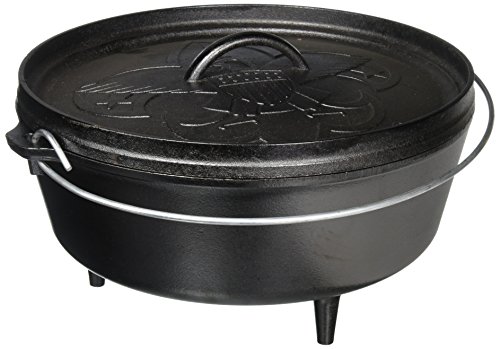
A classic 6-quart camp Dutch oven with integral legs and a flanged lid, designed for cooking with coals. A great choice for campsite stews, chili, bread and desserts.
Make-Ahead Breakfasts to Reheat
Made at home, chilled or frozen, and warmed through in a few minutes at camp. These three cover a weekend between them and none needs more than a few minutes of effort once you’re at the campsite.
10. Freezer Breakfast Burritos
At home: 45 min · At camp: 15–20 min · Makes: 8
You’ll need:
- 8 large flour tortillas
- 12 eggs, scrambled softly
- 1 lb breakfast sausage, cooked and crumbled
- 1.5 lb potatoes, diced small and fried until golden
- 2 cups grated cheddar
- Foil for wrapping
- At camp: salsa and hot sauce
At home: Cook the fillings, then spread them out in shallow containers and refrigerate them promptly rather than leaving them on the counter to cool. Fill each tortilla with egg, sausage, potato and cheese, roll tightly, wrap individually in foil and freeze.
At camp: Warm them in their foil on a grate at the edge of the fire, or in a covered skillet over low heat, for 15 to 20 minutes, turning every 5. Unwrap one and check it is hot right through at 165F before serving the rest. Add salsa at the table.
Camp tip: Let the fillings cool completely in the fridge before assembling the burritos, and pack the salsa separately. Warm fillings and extra moisture can quickly turn the tortillas soggy. If you’ve frozen the burritos, let them thaw safely in the cooler at 40°F (4.4°C) or below; if they’re still frozen when you’re ready to eat, simply allow extra time for them to heat through.
11. Egg Muffin Cups

At home: 35 min · At camp: 5 min · Makes: 12
You’ll need:
- 10 eggs, 1/2 cup milk
- 1 tsp salt, 1/2 tsp black pepper
- 6 slices bacon, cooked and chopped, or 6 oz cooked sausage
- 4 oz spinach, wilted and squeezed dry
- 1.5 cups grated cheddar
- 1 muffin tin, well greased
At home: Whisk the eggs, milk and seasoning. Divide the bacon, spinach and cheese between 12 greased cups, pour the egg mixture over, and bake at 350F for 20 to 25 minutes until set and reading 160F. Let them stop steaming, then refrigerate promptly and keep them chilled or freeze.
At camp: Eat them cold, or warm two per person in a covered pan over low heat for a few minutes until hot through at 165F.
Camp tip: Squeeze the spinach genuinely dry, pressing it in a clean towel. Wet greens release water while the cups bake and again as they thaw, and you certainly don’t want to end up with a puddle in the bottom of the container.
12. Baked Oatmeal Squares
At home: 45 min · At camp: none · Makes: 9 squares
You’ll need:
- 3 cups rolled oats
- 2 tsp baking powder, 2 tsp ground cinnamon, 1/2 tsp salt
- 2 eggs, 2 cups milk, 1/2 cup maple syrup, 1/3 cup melted butter
- 1.5 cups blueberries or diced apple
- 1/2 cup chopped nuts
At home: Combine the dry ingredients, whisk the wet together separately, mix the two and fold in the fruit and nuts. Bake in a greased 9 by 9 inch pan at 350F for 35 to 40 minutes until set in the middle. Let it stop steaming, cut into 9 squares, and refrigerate promptly.
At camp: Eat cold, or warm a square in a dry pan for a minute a side.
Camp tip: Wrap the squares individually so they’re easy to grab in the morning or take with you for later. They hold together well, which also makes them a handy mid-morning snack to throw in your daypack.

Campfire and Dutch Oven Breakfasts
These are the breakfasts for slower mornings at camp, when you have time to get the fire going and enjoy cooking outdoors. All three are cooked over a campfire or charcoal, so check the local fire restrictions before planning them for your trip.
13. Dutch Oven Breakfast Casserole
Prep: 15 min · Cook: 35–45 min · Serves: 6 to 8 · Gear: 12-inch camp Dutch oven, briquettes, lid lifter
You’ll need:
- 1 lb breakfast sausage
- 2 lb frozen shredded hash browns, thawed
- 12 eggs, beaten with 1 cup milk
- 2 cups grated cheddar
- 1 onion and 1 bell pepper, diced
- 1.5 tsp salt, 1 tsp black pepper, oil for greasing
At camp: Grease the Dutch oven, then brown the sausage with the onion and pepper over coals underneath until the sausage reaches 160°F (71°C). Spread the hash browns over the top, pour in the seasoned egg mixture and finish with the cheese. Put the lid on, move some of the coals to the top and bake for 35 to 45 minutes, until the center is set and the egg mixture reaches 160°F (71°C).
Camp tip: Rotate the Dutch oven and lid a quarter turn in opposite directions every 10 minutes or so. This helps distribute the heat from the coals more evenly and prevents one side of the casserole cooking faster than the other.
14. Dutch Oven Monkey Bread
Prep: 10 min · Cook: 25–35 min · Serves: 6 · Gear: 12-inch camp Dutch oven, briquettes, lid lifter
You’ll need:
- 2 cans (16 oz each) refrigerated biscuit dough, each biscuit quartered
- 1/2 cup granulated sugar mixed with 2 tbsp ground cinnamon
- 1/2 cup butter, melted
- 3/4 cup brown sugar
- Butter for greasing
At camp: Grease the Dutch oven well. Toss the dough pieces in the cinnamon sugar and pile them in loosely. Mix the melted butter and brown sugar and pour it over. Bake with roughly two thirds of the coals on the lid and one third underneath for 25 to 35 minutes. It is done when the pieces in the middle are cooked through rather than doughy, which is worth checking with a knife before you turn it out.
Camp tip: Keep more heat on the lid than underneath. Sugar and dough sitting on a hot base will end up burning long before the middle cooks.
15. Campfire French Toast Packets
Prep: 15 min · Cook: 15–20 min · Serves: 4 (4 packets) · Gear: heavy-duty foil, grate
You’ll need:
- 1 lb (450 g) brioche or challah, cut into 1-inch cubes
- 6 large eggs
- 1½ cups milk
- ¼ cup brown sugar
- 2 tsp ground cinnamon
- 2 tsp vanilla extract
- Butter, for greasing the foil
- Maple syrup and berries, to serve
At camp: Whisk the eggs, milk, sugar, cinnamon and vanilla, pour over the bread and leave it to soak for 10 minutes. Grease four double-wrapped sheets of heavy-duty foil generously, divide the mixture between them and seal with headroom, since it puffs as it cooks. Set them on a grate rather than directly on coals and cook 15 to 20 minutes, turning once. They are done when set through and no longer wet in the middle, at 160F for egg dishes.
Camp tip: Camp tip: Use a grate rather than placing the packets directly on the coals, and grease the foil generously to help prevent the French toast from sticking. Slightly stale brioche or challah works particularly well because it absorbs the custard without becoming too soft.
If you like cooking this way, our foil packet camping recipes guide has 25 more easy ideas for cooking in foil at camp.
Eggs, Dairy and the Cooler
Eggs are easy enough to bring camping as long as you pack them carefully. Keep them in their original carton or a hard egg case, somewhere they won’t get crushed, and make sure your cooler stays at 40°F (4.4°C) or below. A small cooler thermometer is useful here, as it lets you check the actual temperature rather than relying on how much ice is left.
Keep raw sausage and bacon well sealed and packed low in the cooler, away from foods you’ll eat without cooking. For more advice on packing your cooler and keeping food safely chilled throughout your trip, see our guide to how to keep food cold when camping.

Prep the Night Before
A little prep the night before can make breakfast at camp much easier. Chop the potatoes and vegetables, measure out pancake ingredients, portion your coffee, or get anything else ready that will save you time in the morning.
For recipes like overnight oats, breakfast burritos and baked oatmeal squares, you can go even further and make the whole breakfast ahead of time. Then all you need to do in the morning is grab it from the cooler or warm it up.
Even just setting out your pan, utensils and coffee gear before bed means less rummaging around first thing in the morning.
Camp Breakfast Gear
You don’t need much equipment to make a good breakfast at camp. A 10- or 12-inch cast-iron skillet will handle most of the recipes in this guide, and a lid is useful for gently reheating things like breakfast burritos and egg muffins. If pancakes are a camping favorite, a flat griddle gives you much more room to cook several at once.
A few other useful additions are a hard-shell egg carrier, a kettle for boiling water without tying up one of your pans, and whatever you use to make your morning coffee.
If you’re building a more complete cooking setup, our guide to camping kitchen essentials covers the ten pieces of gear we think are most useful for a practical camp kitchen.
Planning Breakfast Across a Weekend
It can help to plan your breakfasts around the rhythm of the trip. Save something like smoked salmon bagels or a bacon and egg skillet for your first morning, then bring out make-ahead favorites like breakfast burritos or egg muffins later in the weekend. For your final morning, when you’re probably thinking more about packing up than cooking, keep things simple with overnight oats, pancakes or peanut butter banana rolls.
And if you need ideas for the rest of the day, our collection of easy camping meals has plenty of options for lunches and dinners too.
Camping Breakfast FAQs
What is the easiest breakfast to make while camping?
Overnight oats in a jar. You build them the night before, they need no pan and no heat, and you eat straight from the jar. If you want something hot for the same effort, a foil-wrapped freezer burrito warmed at the edge of the fire is close behind.
Can you take eggs camping?
Yes. Keep them in their carton or a hard case, packed where they will not be crushed, in a cooler holding 40F (4.4C) or below. Raw eggs in the shell keep 3 to 5 weeks refrigerated according to FoodSafety.gov, so a weekend is well within that as long as the cooler holds temperature.
How do you make coffee while camping?
Pour-over needs the least gear and washing up but brews cup by cup. A French press brews several cups at once depending on its size, and needs the grounds rinsed out. Percolators come in larger capacities, which suits a group. Start the water before you start cooking, since the stove will be busy once breakfast is underway.
What camping breakfasts work without a cooler?
Instant oatmeal, granola with shelf-stable milk, peanut butter and banana tortilla rolls, and pancakes from a premixed dry jar. These are worth planning for the last morning of a trip, when the cooler has been working for two or three days.
Do eggs take longer to cook at altitude?
Anything cooked in water does. Water boils at a lower temperature as you climb, around 203F at 5,000 feet rather than 212F at sea level, so boiling takes longer. Colorado State University Extension notes that a three-minute egg can take closer to five minutes at 5,000 feet. Frying and scrambling are far less affected, since the pan temperature does not depend on elevation.
Can you cook a Dutch oven breakfast if there are fire restrictions?
It depends on the restriction and the location. Charcoal briquettes are often restricted at the same time as wood fires, but rules vary by land manager and by restriction level, and some levels still allow certain equipment. Check the current rules for your specific campground or public land before planning a charcoal breakfast, and have a stove option in reserve.
How do you make breakfast easier for a group?
Cook one thing in one large pan and let people add their own toppings, rather than cooking to order on a two-burner stove. Do the prep the evening before while there is still daylight: mix the pancake dry ingredients, measure out the French toast ingredients, dice potatoes and portion the coffee.
