
25 Foil Packet Camping Recipes For Your Next Camping Trip!
Foil packet cooking is one of those campfire methods that sounds almost too easy: wrap everything up, chuck it over the coals and come back when dinner is ready. In reality, getting everything inside the packet cooked properly at the same time takes a little more thought.
That’s where these foil packet camping recipes are different. Each one includes specific quantities, realistic cooking times and practical prep tips, so you know when to parboil the potatoes, how small to cut the vegetables and when delicate ingredients need to go in later.
There are 25 recipes below, covering chicken, beef & sausage, seafood, vegetarian meals, breakfasts and desserts, along with everything you need to know about wrapping, cooking over embers and preparing packets ahead of time.
If you want a broader mix of camp cooking methods, our list of easy camping meals covers no-cook, one-pan and make-ahead as well.
This post contains affiliate links. As an Amazon Associate, I earn from qualifying purchases. If you book or buy through these links, I may earn a small commission at no extra cost to you. This helps support Avid Campers and allows me to keep creating free outdoor content.
Food Safety in One Place
Rather than repeating this under all twenty-five recipes, here is the whole of it. Keep perishable food in a cooler holding 40F (4.4C) or below, and put a cheap fridge thermometer inside so you actually know. Food is not safe because it was frozen when you packed it, because there is still ice floating in the water, or because it feels cold to your hand. Once raw meat comes out of the cooler it should not sit around for more than two hours, and no more than one hour if it is above 90F. Our guide to how to keep food cold when camping covers coolers, dry ice and freezing food before you leave.
The safe cooking temperatures worth knowing, from the USDA: poultry 165F, ground meat 160F, whole cuts of beef, pork and lamb 145F with a three-minute rest, fish 145F, and egg dishes 160F. Anything you are reheating rather than cooking from raw, including frozen breakfast burritos, wants to be piping hot at 165F throughout. Recipes below only mention a temperature where it genuinely changes what you do.
💡 The one thermometer rule
A sealed foil packet gives you no color, no smell and no sizzle to judge by, which makes guesswork worse here than in almost any other cooking method. An instant-read thermometer costs very little and removes the problem entirely. Open a packet away from your face, probe the thickest piece, and if it needs longer just fold it up and put it back.
How to Build a Packet That Does Not Leak
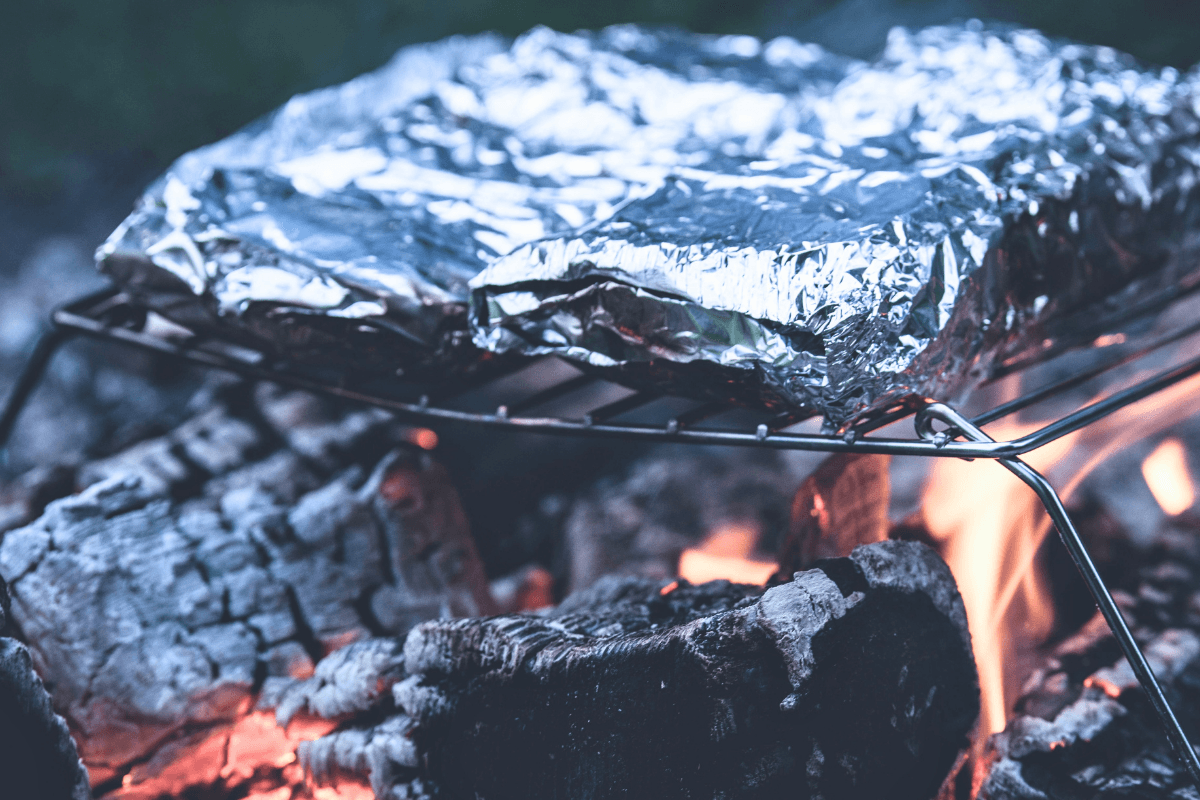
Use heavy-duty foil and cut a sheet about 18 inches long from a 12-inch roll for each packet, which gives you a rectangle roughly 12 by 18 inches. Pile the food across the middle of one half, bring the two long edges up to meet above it, and fold them over together two or three times to make a seam. Then roll each open end in towards the food. You want a sealed pouch with a bit of air space inside, not a tight parcel, because the trapped steam is doing most of the cooking.
Double wrap anything with butter, sauce or a lot of moisture, and anything going straight onto embers. Add the second sheet with the seam running the other way so one weak fold cannot become a leak. Greasing the inside of the foil is worth it for cheese, sugar and egg, and unnecessary for anything already sitting in oil or butter.
Build the fire about an hour before you want to eat. What you are after is a bed of glowing embers raked flat, not flames. Flames scorch the outside while the middle stays raw and give you almost no control. If the site has a grate, use it: a few inches above the coals is gentler and more even, and it is the better choice for anything with dough or sugar in it.
When you open a packet, cut or peel the seam away from your face. The steam inside is hot enough to scald, and it comes out all at once.
Making Everything Finish at the Same Time
This is the part that makes the difference. Raw potato and root vegetables need 30 to 40 minutes over embers. Chicken thigh, sausage and firm vegetables need 25 to 30. Fish, shrimp and soft vegetables need 12 to 18. Put them in together without adjusting anything and one of them is likely to come out wrong.
There are four fixes and the recipes below use all of them. Cut the slow things smaller, down to half an inch or less. Parboil potatoes at home for 8 to 10 minutes so they only need to finish. Use precooked ingredients such as smoked sausage so the only clock running is the vegetables. Or layer, putting the slow, sturdy things at the bottom against the heat and the delicate things on top where they steam.
Acidic Ingredients and Foil
Acid and salt together break down the thin oxide layer that protects aluminum foil, and heat speeds it up. That does two visible things: it pits the foil, and it can leave a faintly metallic edge on the food. It also increases how much aluminum migrates into what you are eating.
Worth keeping in proportion. Food safety bodies set a tolerable weekly intake for aluminum covering all dietary sources, and cooking with foil is one contributor among many. This is not a reason to avoid foil packets, and it is mostly a question of flavor and of the foil itself rather than anything alarming.
The practical approach used throughout this article: where an acidic ingredient is there for brightness rather than for cooking, add it after you open the packet. Lemon juice, vinegar and fresh tomato almost always taste better added at the end anyway, and keeping them out of a long steam avoids both the pitting and the dull flavor. Where a sauce is genuinely part of the cooking, as in the meatball packets, use it and do not worry about it. Parchment paper is sometimes suggested as a fix for this, but it is not a good one over a fire: most parchment is only rated to around 420 to 450F and manufacturers specifically say to keep it away from grills and direct flame, which is exactly what a bed of embers is.
Chicken Foil Packet Recipes

Use boneless thighs wherever you can. They stay moist well past the 165F chicken has to reach, and an ember bed is not a precise instrument. Breast meat goes dry in the few minutes between done and overdone, so if you are using it, cut it smaller and check earlier.
1. BBQ Chicken and Baby Potato Packets
Prep: 15 min · Cook: 30–35 min · Serves: 4 (4 packets)
You’ll need:
- 1.5 lb boneless chicken thighs, cut into 1-inch pieces
- 1.25 lb baby potatoes, parboiled 8 minutes and halved
- 1 red onion, cut into thick wedges
- 3/4 cup barbecue sauce, plus more to serve
- 1 tbsp oil, 1 tsp smoked paprika, 1 tsp salt, 1/2 tsp black pepper
- 1 cup grated cheddar and 3 scallions, to finish
At camp: Toss the chicken, potatoes and onion with the oil, paprika, salt, pepper and barbecue sauce, then divide between four double-wrapped sheets of heavy-duty foil, spreading each pile out rather than mounding it. Seal with space inside and cook on a grate or directly on hot embers for 30 to 35 minutes, turning once at the halfway point. Open one and check the thickest piece of chicken reads 165F and a knife slides into a potato easily. Scatter the cheddar over the open packets, leave them by the fire for two minutes to melt, then finish with scallions.
Camp tip: Parboil the potatoes at home the night before you leave. Eight minutes in boiling water is the difference between this packet working and serving chicken that is done alongside potatoes that are still crunchy in the middle.
2. Chicken Fajita Packets
Prep: 15 min · Cook: 20–25 min · Serves: 4 (4 packets)
You’ll need:
- 1.5 lb boneless chicken thighs, sliced into thin strips
- 2 bell peppers and 1 large onion, sliced 1/4 inch thick
- 2 tbsp fajita seasoning, 2 tbsp oil
- 8 small flour tortillas
- 2 limes, 1 cup sour cream, 1 avocado, fresh cilantro, to serve
At camp: Toss the chicken, peppers and onion with the seasoning and oil and divide between four sheets of heavy-duty foil, single wrapped is fine here since there is little liquid. Seal and cook on a grate or embers for 20 to 25 minutes, turning once. Check the chicken reads 165F, then tip each packet straight into warm tortillas and add lime, sour cream, avocado and cilantro at the table.
Camp tip: Slice the peppers no thicker than a quarter inch. Thick strips are still squeaky when thin-sliced chicken is done, and this is one packet where everything is supposed to be soft. Add the lime after opening rather than sealing it in.
3. Chicken, Bacon and Ranch Packets
Prep: 15 min · Cook: 30–35 min · Serves: 4 (4 packets)
You’ll need:
- 1.5 lb boneless chicken thighs, cut into 1-inch pieces
- 6 slices bacon, chopped
- 1.25 lb baby potatoes, parboiled 8 minutes and halved
- 3 tbsp ranch seasoning
- 1 cup grated cheddar and 3 scallions, to finish
At camp: Toss the chicken, bacon and potatoes with the ranch seasoning and divide between four double-wrapped foil sheets. Seal and cook 30 to 35 minutes over embers or on a grate, turning once. Open, check the chicken is at 165F, then add the cheddar and leave the packets open by the heat for two minutes before topping with scallions.
Camp tip: The bacon renders enough fat to baste everything else, so this is one of the few packets that needs no added oil or butter. Chop it small, around half-inch pieces, so the fat comes out early rather than sitting in one strip.
4. Teriyaki Chicken and Pineapple Packets
Prep: 10 min · Cook: 20–25 min · Serves: 4 (4 packets)
You’ll need:
- 1.5 lb boneless chicken thighs, cut into 1-inch pieces
- 1 can (20 oz) pineapple chunks in juice, well drained
- 1 red pepper, cut into 1-inch pieces
- 1/2 cup teriyaki sauce, 1 tbsp oil
- 2 pouches (8.8 oz each) precooked rice
- 2 scallions and 2 tbsp sesame seeds, to finish
At camp: Divide the rice between four foil sheets and spread it flat as a base, then pile the chicken, pineapple and pepper on top and spoon over the teriyaki and oil. Double wrap, seal, and cook 20 to 25 minutes on a grate, turning once. Check the chicken is at 165F, then finish with scallions and sesame seeds.
Camp tip: Drain the pineapple properly and use canned rather than fresh. Fresh pineapple throws off far more liquid and you end up steaming the rice into mush, while the canned chunks are already soft enough to finish at the same time as the chicken.
5. Garlic and Herb Chicken with Green Beans
Prep: 10 min · Cook: 25–30 min · Serves: 4 (4 packets)
You’ll need:
- 1.5 lb boneless chicken thighs, cut into 1-inch pieces
- 1 lb green beans, trimmed
- 4 cloves garlic, sliced
- 4 tbsp butter, 2 tsp dried thyme, 1 tsp salt, 1/2 tsp black pepper
- 1 lemon, to serve
At camp: Lay the beans down first as a bed, sit the chicken on top, then add the garlic, a tablespoon of butter per packet and the thyme, salt and pepper. Double wrap, seal loosely so there is room for steam, and cook 25 to 30 minutes over embers, turning once. Check the chicken reads 165F, then squeeze lemon over the open packets.
Camp tip: Beans underneath, chicken on top. The beans take the direct heat and protect the chicken from scorching, and the juices run down into them as they cook. Reverse it and you get pale chicken and burnt beans.
Beef and Sausage Packets
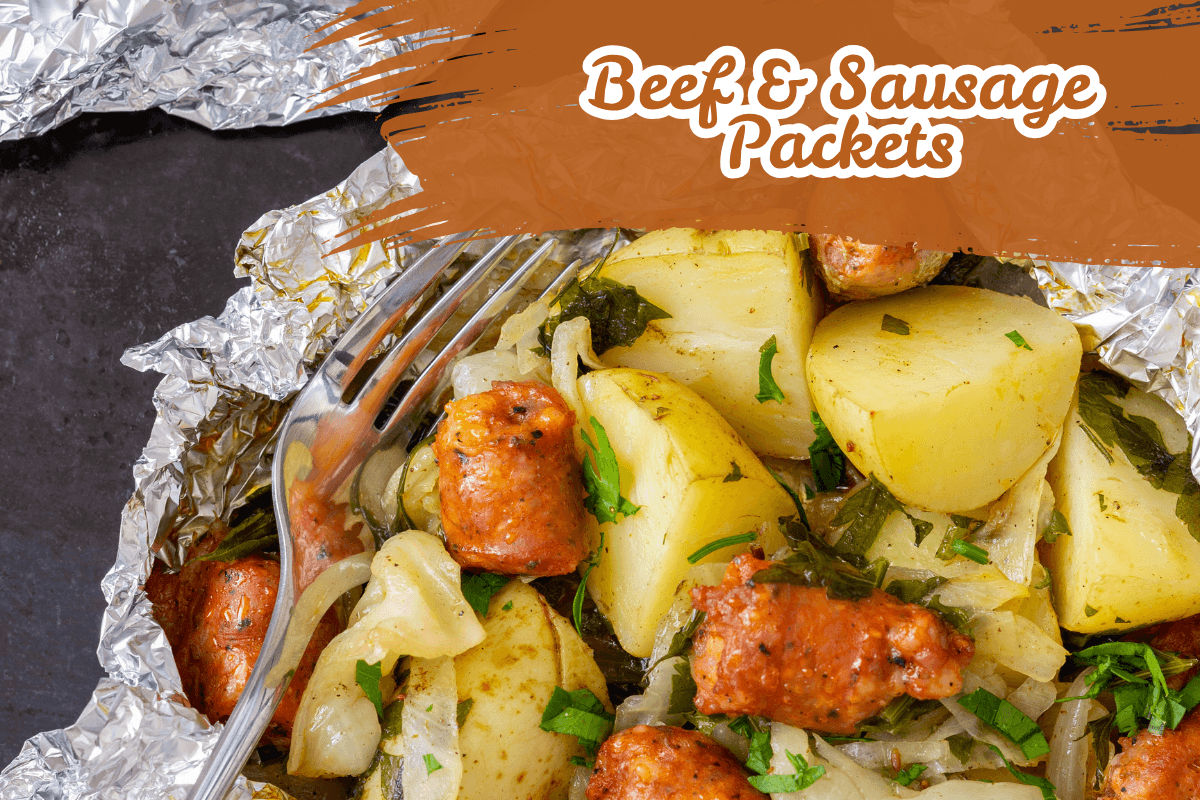
Ground beef needs to reach 160F, which you cannot judge by eye inside foil, so these are the packets where a thermometer earns its keep. Sausage that is already cooked, like kielbasa or smoked sausage, makes life much easier because the only thing you are waiting on is the vegetables.
6. Cheeseburger Packets
Prep: 15 min · Cook: 25–30 min · Serves: 4 (4 packets)
You’ll need:
- 1.5 lb ground beef, formed into four seasoned patties
- 2 large potatoes, sliced 1/8 inch thick
- 1 onion, sliced thin
- 4 tbsp butter, 1 tsp salt, 1/2 tsp black pepper, 1 tsp garlic powder
- 4 slices cheese, pickles and burger sauce, to finish
At camp: Grease each foil sheet, then lay the potato slices and onion down in an overlapping layer and season them. Sit a patty on top, dot with butter, then double wrap and seal. Cook 25 to 30 minutes on a grate or embers, turning once. Open, check the beef reads 160F, lay a slice of cheese on each patty and leave the packets open by the fire for a minute to melt. Add pickles and sauce at the table.
Camp tip: Slice the potatoes thin, about an eighth of an inch, and use a raw patty rather than a precooked one. Thin potato cooks in the same window as the beef, and the patty sitting on the potato instead of the foil is what stops the base burning while the middle is still pink.
7. Steak and Potato Packets
Prep: 15 min · Cook: 20–25 min · Serves: 4 (4 packets)
You’ll need:
- 1.5 lb sirloin or ribeye, cut into 1.5-inch cubes
- 1.25 lb waxy potatoes, parboiled 10 minutes and cut into 1-inch pieces
- 1 onion, cut into wedges, 8 oz mushrooms, halved
- 4 tbsp butter, 3 cloves garlic, sliced
- 2 tsp dried rosemary, 1 tsp salt, 1/2 tsp black pepper
At camp: Toss everything except the butter together and divide between four double-wrapped sheets, then dot a tablespoon of butter into each. Seal and cook on a grate for 20 to 25 minutes, turning once. Whole cuts of beef are safe at 145F with a three-minute rest, so check at 20 minutes if you want it pink in the middle and give it the full 25 if you do not.
Camp tip: Cut the steak into large cubes and the potato into small ones, which is the opposite of what looks right. Big pieces of beef survive the long cook the potatoes need; thin-sliced steak will be grey and tough by the time a raw potato is soft, which is why parboiling matters here too.
8. Sausage, Pepper and Potato Packets
Prep: 10 min · Cook: 30–35 min · Serves: 4 (4 packets)
You’ll need:
- 1.5 lb smoked sausage, sliced 1/2 inch thick
- 1.25 lb potatoes, cut into 1/2-inch pieces
- 2 bell peppers and 1 onion, cut into 1-inch pieces
- 3 tbsp olive oil, 2 tsp Italian seasoning, 1 tsp salt, 1/2 tsp chilli flakes
At camp: Toss everything together and divide between four double-wrapped foil sheets, keeping the layer shallow so the potatoes touch the hot surface. Seal and cook 30 to 35 minutes over embers, turning at the halfway point. It is ready when a knife goes into a potato without resistance.
Camp tip: Because the sausage is already cooked, the potatoes set the timer, so cut them to half an inch and no bigger. It is a forgiving one to start with while you get a feel for how your fire behaves.
9. Kielbasa and Cabbage Packets
Prep: 10 min · Cook: 25–30 min · Serves: 4 (4 packets)
You’ll need:
- 1.25 lb kielbasa, sliced 1/2 inch thick
- 1 small cabbage (about 1.5 lb), cut into 1-inch wedges
- 1 onion, sliced
- 4 tbsp butter, 2 tsp caraway seeds, 1 tsp salt, 1 tsp black pepper
- Wholegrain mustard, to serve
At camp: Divide the cabbage and onion between four foil sheets, tuck the kielbasa in among it, and add a tablespoon of butter, the caraway and seasoning to each. Double wrap and seal with plenty of room, as the cabbage collapses considerably. Cook 25 to 30 minutes on embers, turning once, until the cabbage is soft and starting to caramelize at the edges. Serve with mustard.
Camp tip: Cabbage suits this method well, because it holds up to half an hour of steam and turns sweet rather than watery. Cut it into wedges with some core left on each one so it holds together instead of falling into loose leaves that scorch.
10. Meatball and Mozzarella Packets
Prep: 10 min · Cook: 18–22 min · Serves: 4 (4 packets)
You’ll need:
- 24 precooked meatballs (about 1.5 lb)
- 1.5 cups jarred marinara sauce
- 1 tsp dried oregano, 1 tsp garlic powder
- 6 oz mozzarella, torn or grated
- 4 sub rolls and fresh basil, to serve
At camp: Divide the meatballs between four greased, double-wrapped foil sheets, spoon over the sauce and add the oregano and garlic powder. Seal and cook on a grate rather than directly on embers for 18 to 22 minutes, turning once, until the sauce is bubbling and the meatballs are hot right through at 165F. Open, add the mozzarella, and leave by the fire for two minutes to melt before spooning into rolls with basil.
Camp tip: This is the one recipe here where an acidic sauce is doing the cooking rather than finishing the dish, so the sauce goes in from the start. Precooked meatballs keep the cook short, which is mostly about not overcooking them. Grease the foil, or the sauce welds itself to it.
Seafood Foil Packets

Fish and shellfish are the fastest thing you can put on a fire and the easiest to overshoot. Most need 12 to 20 minutes, so check early and keep them well away from the potato packets, which will still have fifteen minutes to run. A grate is worth using here if you have one.
11. Shrimp Boil Packets
Prep: 15 min · Cook: 15–20 min · Serves: 4 (4 packets)
You’ll need:
- 1.5 lb raw shrimp, peeled and deveined
- 12 oz andouille or smoked sausage, sliced 1/2 inch thick
- 2 ears corn, each cut into 4 rounds
- 1 lb baby potatoes, parboiled 10 minutes and halved
- 4 tbsp butter, 2 tbsp Old Bay seasoning, 3 cloves garlic, sliced
- 2 lemons and fresh parsley, to serve
At camp: Divide the potatoes, corn and sausage between four double-wrapped foil sheets and toss with the garlic and half the Old Bay. Lay the shrimp on top, dot with butter and add the rest of the seasoning. Seal and cook 15 to 20 minutes on a grate or embers, turning once. The shrimp are done when they are opaque and curled into a loose C; a tight O means they have gone slightly too far. Squeeze lemon over after opening.
Camp tip: Parboiling the potatoes is important in this one. Raw potato takes considerably longer to cook than shrimp, so without that step you risk either undercooked potatoes or overcooked shrimp.
12. Garlic Butter Shrimp and Zucchini
Prep: 10 min · Cook: 12–15 min · Serves: 4 (4 packets)
You’ll need:
- 1.5 lb raw shrimp, peeled and deveined
- 2 zucchini, sliced into 1/2-inch thick rounds
- 6 tbsp butter, 4 cloves garlic, minced
- 1 tsp chilli flakes, 1 tsp salt, 1/2 tsp black pepper
- 1 lemon and fresh parsley, to serve
At camp: Lay the zucchini rounds down as a single layer, put the shrimp on top, then divide the butter, garlic, chilli and seasoning between the packets. Double wrap, seal, and cook 12 to 15 minutes on a grate, turning once. Open as soon as the shrimp are opaque and finish with lemon and parsley.
Camp tip: Cut the zucchini thick, half an inch at least. Thin slices turn to water in the time shrimp need, and that water dilutes the garlic butter into a puddle. Thick rounds keep some bite and hold the shrimp off the hot foil.
13. Honey Soy Salmon and Bok Choy
Prep: 10 min · Cook: 12–18 min · Serves: 4 (4 packets)
You’ll need:
- 4 salmon fillets, about 6 oz each
- 4 heads bok choy, halved lengthways
- 4 tbsp honey, 3 tbsp soy sauce, 1 tbsp sesame oil
- 3 cloves garlic and 1 tbsp grated ginger
- 2 scallions and 1 tbsp sesame seeds, to finish
At camp: Sit the bok choy cut side down on each foil sheet, lay a salmon fillet on top, and spoon over the honey, soy, sesame oil, garlic and ginger. Double wrap and seal with room above the fish. Cook 12 to 18 minutes on a grate, turning once, and check at 12: salmon is done at 145F and should flake when you press it. Finish with scallions and sesame seeds.
Camp tip: Give fish packets their own corner of the fire, at the cooler edge of the embers rather than the middle. They need roughly half the time of anything with potato in it, and the easiest way to overcook them is to put them on with everything else and forget.
14. Cod with Olives, Capers and Fennel
Prep: 10 min · Cook: 14–18 min · Serves: 4 (4 packets)
You’ll need:
- 4 skinless cod loins, about 6 oz each
- 1 fennel bulb, sliced thin, or 1 leek, sliced
- 1/2 cup pitted green olives, halved, 2 tbsp capers, drained
- 4 tbsp olive oil, 2 tsp dried oregano, 1 tsp salt
- 1 lemon and fresh parsley, to serve
At camp: Lay the fennel down as a bed, sit the cod on it, then scatter over the olives, capers and oregano and spoon on the oil. Double wrap, seal, and move the packets with a spatula rather than tongs because cod breaks easily. Cook 14 to 18 minutes on a grate, turning once carefully. It is done at 145F, when it flakes cleanly. Add lemon and parsley after opening.
Camp tip: Slice the fennel as thin as you can manage, no more than an eighth of an inch. It is much denser than it looks and thick slices will still be crunchy when delicate cod is already past its best. Add the lemon after opening rather than sealing it in, both for the reason above and because it turns bitter over a long steam.
Vegetarian Foil Packets

Vegetable packets generally cook faster than anything with meat in them, so plan on them coming off first. The exception is the whole baked potato, which is the longest cook in this article by some distance.
15. Halloumi and Mediterranean Vegetables
Prep: 10 min · Cook: 20–25 min · Serves: 4 (4 packets)
You’ll need:
- 2 blocks (8 oz each) halloumi, sliced 1/2 inch thick
- 2 zucchini and 2 bell peppers, cut into 1-inch pieces
- 1 red onion, cut into wedges
- 4 tbsp olive oil, 2 tsp dried oregano, 1 tsp salt, 1/2 tsp black pepper
- 1 lemon and fresh mint, to serve
At camp: Toss the vegetables with the oil and oregano and divide between four foil sheets, then tuck the halloumi slices in among them rather than laying them on top, so the cheese steams instead of drying out. Seal, single wrap is fine, and cook 20 to 25 minutes on a grate or embers, turning once. Finish with lemon and torn mint.
Camp tip: Halloumi holds its shape through this cook where most cheeses would melt into the vegetables. Pat the slices dry before they go in; the brine they are packed in adds water you do not want.
16. Loaded Baked Potato Packets
Prep: 5 min · Cook: 45–60 min · Serves: 4 (4 packets)
You’ll need:
- 4 large baking potatoes, about 10 oz each
- 2 tbsp olive oil and 2 tsp coarse salt
- 4 tbsp butter
- 1.5 cups grated cheddar, 1 cup sour cream
- 4 scallions and 6 slices cooked bacon, chopped, to finish
At camp: Prick each potato several times, rub with oil and salt, and double wrap tightly with no air space, which is the one exception to the usual rule. Set them at the edge of the embers rather than the middle and turn every 15 minutes. They take 45 to 60 minutes and are ready when a knife goes straight through to the center. Split, add butter and cheese while they are hot, then the sour cream, scallions and bacon.
Camp tip: Put these on before anything else, then build the rest of the meal around them. They take far longer than anything else here, and the edge of the fire suits them better than the hot center, which chars the skin long before the middle softens.
17. Black Bean and Sweet Potato Packets
Prep: 15 min · Cook: 30–35 min · Serves: 4 (4 packets)
You’ll need:
- 2 lb sweet potato, cut into 1/2-inch cubes
- 2 cans (15 oz each) black beans, drained and rinsed
- 1 red onion, diced, 1 red pepper, diced
- 3 tbsp oil, 2 tsp ground cumin, 2 tsp smoked paprika, 1 tsp salt
- 2 limes, 1 avocado and fresh cilantro, to serve
At camp: Toss the sweet potato, onion and pepper with the oil and spices, divide between four double-wrapped foil sheets, and scatter the beans over the top so they do not catch against the hot foil. Seal and cook 30 to 35 minutes over embers, turning once, until the sweet potato is soft all the way through. Finish with lime, avocado and cilantro.
Camp tip: Cut the sweet potato at home and keep it to half-inch cubes. It is denser than ordinary potato and a one-inch dice will still have a firm center when everything around it is done. Beans on top rather than underneath, or they split and stick.
18. Mushroom and Garlic Butter Packets
Prep: 10 min · Cook: 18–22 min · Serves: 4 (4 packets)
You’ll need:
- 2 lb mixed mushrooms, halved or quartered if large
- 6 tbsp butter, 5 cloves garlic, sliced
- 2 tsp dried thyme, 1 tsp salt, 1/2 tsp black pepper
- 4 thick slices sourdough and fresh parsley, to serve
At camp: Divide the mushrooms between four foil sheets, spreading them in a shallow layer rather than a heap, and add the butter, garlic, thyme and seasoning. Seal loosely, double wrapped, and cook 18 to 22 minutes on a grate, turning once. Open, tip the mushrooms and all their buttery liquid over toasted sourdough, and finish with parsley.
Camp tip: Mushrooms release a lot of water, so keep the layer shallow and seal the packet loosely rather than tightly. A tight packet traps the steam and boils them pale; a looser one lets enough escape that they concentrate and brown at the edges.
Breakfast Foil Packets
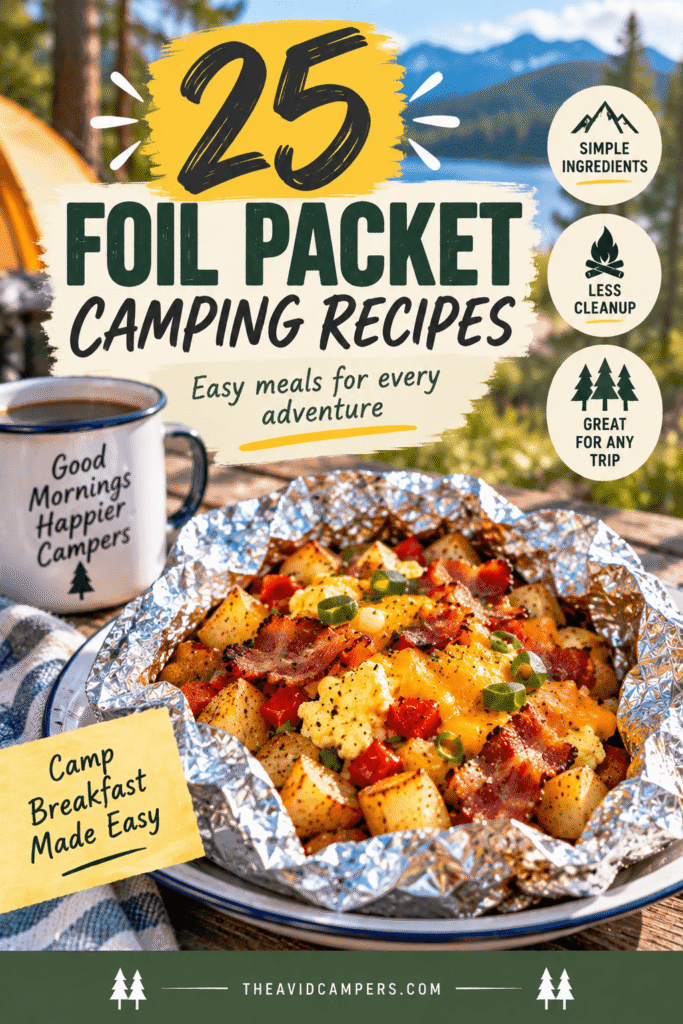
Morning packets go onto the embers while the coffee brews and need far less attention than a skillet does first thing in the morning. If coffee is part of your campsite routine, our guide to the best camping coffee makers covers the easiest ways to make a proper cup at camp. Assemble the packets the night before and you have almost nothing to do beyond putting them on the heat.
19. Breakfast Hash Packets
Prep: 15 min · Cook: 25–30 min · Serves: 4 (4 packets)
You’ll need:
- 1.5 lb potatoes, parboiled 8 minutes and cut into 1/2-inch cubes
- 1 lb breakfast sausage, in small pieces
- 1 onion and 1 bell pepper, diced
- 3 tbsp oil, 1 tsp smoked paprika, 1 tsp salt, 1/2 tsp black pepper
- 4 eggs and 1 cup grated cheddar, to finish
At camp: Toss the potatoes, sausage, onion and pepper with the oil and seasoning, divide between four greased double-wrapped sheets and seal. Cook 20 to 25 minutes over embers, turning once, until the sausage is at 160F and the potatoes are soft. Open each packet, make a well in the middle, crack in an egg, add cheese, and reseal loosely for 5 more minutes until the white is set and the yolk is how you like it.
Camp tip: Add the egg near the end, not at the start. An egg sealed in from the beginning turns into a rubbery disc long before the potatoes are done, and the five-minute finish is what makes this worth cooking rather than just eating hash.
20. Reheated Breakfast Burritos
Prep: 30 min at home · Cook: 15–20 min · Serves: 4
You’ll need:
- 8 large flour tortillas
- 10 eggs, scrambled and cooled
- 1 lb breakfast sausage or 12 slices bacon, cooked and chopped
- 1 lb potatoes, diced and fried until golden
- 2 cups grated cheddar
- Salsa and hot sauce, to serve
At camp: Assemble and wrap these individually in foil at home, then chill or freeze them. At camp, set them on a grate at the edge of the embers and heat 15 to 20 minutes, turning every 5, longer if they went in frozen. Unwrap one and check it is piping hot at 165F all the way to the middle. Add salsa and hot sauce at the table.
Camp tip: Leave the salsa, fresh tomato and anything watery out of the filling. They soak into the tortilla in the cooler and you unwrap a soggy parcel. Keep frozen burritos at 40F (4.4C) or below as they thaw, and if the cooler has not kept them properly cold, do not chance it.
21. Cinnamon French Toast Packets
Prep: 20 min, including a 10 min soak · Cook: 15–20 min · Serves: 4 (4 packets)
You’ll need:
- 1 large brioche or challah loaf, cut into 1-inch cubes (about 10 cups)
- 6 eggs, 1.5 cups milk
- 1/4 cup brown sugar, 2 tsp ground cinnamon, 2 tsp vanilla extract
- 4 tbsp butter, for greasing
- Maple syrup and berries, to serve
At camp: Whisk the eggs, milk, sugar, cinnamon and vanilla, pour it over the bread and let it soak for 10 minutes. Grease four double-wrapped foil sheets generously, divide the mixture between them, and seal with plenty of headroom because it puffs. Cook on a grate, not directly on embers, for 15 to 20 minutes, turning once. It is done when it is set through and no longer wet in the center, at 160F for egg dishes. Serve with syrup and berries.
Camp tip: Grease the foil properly and use a grate. Egg and sugar together stick harder than anything else in this article, and direct embers scorch the base while the middle is still liquid. Stale bread soaks better than fresh, so this is a good use for the end of a loaf.

Foil Packet Desserts
Dessert packets go on the dying embers once dinner is off, which is exactly when nobody wants to be managing a fire. They need somewhere between 8 and 25 minutes depending on which one, and very little attention. All four are better on a grate than sitting in the coals.
22. Campfire Banana Boats
Prep: 5 min · Cook: 8–10 min · Serves: 4
You’ll need:
- 4 bananas, unpeeled
- 1/2 cup chocolate chips
- 1 cup mini marshmallows
- 2 tbsp crushed graham crackers, to finish
At camp: Slit each banana lengthways through the skin without cutting all the way through, and push the sides apart to open a channel. Stuff with chocolate and marshmallows, wrap each one singly in foil, and set on the embers or a grate for 8 to 10 minutes. Open the top and eat straight from the skin with a spoon, with crushed graham cracker scattered over.
Camp tip: Cut the foil squares before you leave home. If there are kids on the trip this is usually the one they want to assemble themselves, and it goes better when the only part needing a knife is already done.
23. Campfire Apple Crisp
Prep: 10 min · Cook: 20–25 min · Serves: 4 (4 packets)
You’ll need:
- 4 apples, cored and sliced 1/4 inch thick
- 1/3 cup brown sugar, 2 tsp ground cinnamon
- 4 tbsp butter, plus more for greasing
- 1.5 cups granola
- Cream or ice cream, to serve
At camp: Toss the apple with the sugar and cinnamon and divide between four greased, double-wrapped foil sheets. Dot with butter, seal, and cook on a grate for 15 minutes. Open each packet, scatter the granola over the top, and leave them open by the heat for another 5 to 10 minutes so it crisps rather than steams.
Camp tip: Granola instead of a mixed oat topping removes the only fiddly part of a crisp and tastes almost the same. Adding it after the apples have softened, with the packet open, is what keeps it crunchy; sealed in from the start it just goes soft.
24. Peach and Blueberry Packets
Prep: 5 min · Cook: 12–15 min · Serves: 4 (4 packets)
You’ll need:
- 6 peaches, sliced, or 2 cans (15 oz each) peach slices, drained
- 2 cups blueberries
- 1/4 cup brown sugar, 1 tsp ground cinnamon
- 3 tbsp butter
- Cream or vanilla ice cream, to serve
At camp: Divide the fruit between four greased foil sheets, add the sugar, cinnamon and butter, and seal double wrapped. Cook on a grate for 12 to 15 minutes, or 8 to 10 if you are using canned peaches, until the fruit has collapsed into its own syrup. Open carefully, as the syrup is extremely hot.
Camp tip: Canned peaches genuinely work here and cut the time by a third, which makes this the dessert to keep in the food box for a trip outside peach season. Whichever you use, put the blueberries on top so they burst last.
25. Monkey Bread Packets
Prep: 10 min · Cook: 20–25 min · Serves: 4 (4 packets)
You’ll need:
- 2 cans (16 oz each) refrigerated biscuit dough, each biscuit quartered
- 1/2 cup granulated sugar, 2 tsp ground cinnamon
- 6 tbsp butter, melted, plus more for greasing
- 1/3 cup brown sugar
At camp: Toss the dough pieces in the cinnamon sugar and divide between four well-greased, double-wrapped foil sheets, keeping them in a single loose layer rather than a ball. Mix the melted butter and brown sugar and spoon it over. Seal with headroom for rising and cook on a grate, never directly on embers, for 20 to 25 minutes, turning every 8. It is done when the dough is cooked through in the middle with no raw dough between the pieces.
Camp tip: This is the packet most likely to burn, because dough and sugar sitting on a hot surface catch long before the center cooks. A grate and a single layer solve it. If you only have embers, rake them thin under this one and turn it more often.
Assembling Packets at Home
Almost everything here is better built in your kitchen, where you have a sink, a trash can and decent light. Chopping raw chicken at a picnic table in the dark is worth avoiding.
The packets that assemble best ahead are the sturdy ones: the chicken and potato packets, the sausage and pepper packets, kielbasa and cabbage, the black bean and sweet potato, and the breakfast hash. They sit flat in the cooler and go straight onto the heat. Marinated meat is even better for the wait, since it carries on marinating.
Some things are better added at camp. Fish and shrimp go in on the day, not the night before. Cheese, sour cream, avocado, fresh herbs and citrus all go on after opening. Bread and dough packets, like the monkey bread and French toast, want assembling not long before cooking so they do not go soggy. Anything you are freezing rather than chilling should go in flat and unfrozen liquids kept to a minimum.
Keep assembled packets at 40F (4.4C) or below the whole time, and check the thermometer rather than assuming. Frozen packets do not reliably thaw to a set schedule; how fast they thaw depends on how cold the cooler is and how deeply they are packed, so plan around what has actually thawed rather than which night it is. Label the outside of every packet with a marker, because they all look identical on a fire and you would rather not open four to find the vegetarian one.
The Gear That Actually Matters
Foil packet cooking needs less equipment than almost any other way of cooking outdoors, which is a large part of why it is worth learning. Two things make a real difference to how the recipes above turn out.
The first is the foil itself. Heavy-duty foil is worth using because it is less likely to tear when you move a packet across embers with tongs, and a torn packet loses both steam and cooking juices. If heavy-duty foil isn’t available, two layers of standard foil with the seams running opposite ways are a workable substitute.

A practical choice for foil packet meals and campfire cooking. The heavy-duty foil is less prone to tearing when wrapping food or cooking around the grill and coals.
The second is a thermometer. A sealed packet gives you very little visual feedback, so an instant-read thermometer is particularly useful here. It lets you check 165°F on chicken or 160°F on ground meat without repeatedly opening the packet.

A fast instant-read thermometer for checking meat and other foods at camp, taking the guesswork out of knowing when chicken, burgers and other campsite meals are safely cooked.
Beyond those two, long tongs and a heat-resistant glove keep your hands out of the fire, and a folding grate is worth having if your site does not provide one, since several recipes above are better cooked a few inches above the embers than sitting in them. If you are putting together a full camp cooking setup rather than just the foil packet basics, our guide to camping kitchen essentials covers the ten things worth packing.
Fire Restrictions
This method needs wood or charcoal embers, which is usually the first thing restricted when conditions get dry. Restrictions are set by whoever manages the land, so a national forest, a state park, a county and a private campground can all have different rules on the same weekend, and restriction levels with similar names do not necessarily mean the same thing in different places.
The general pattern is that wood fires, charcoal and cooking over embers get prohibited first, while stoves running on gas or liquid fuel with a shut-off valve are sometimes still allowed, occasionally with conditions attached. That is a pattern, not a guarantee. Check the current restrictions for the specific campground or public land before you shop, since they change through the season and sometimes within a week.
If restrictions are in place when you arrive, these recipes do not simply move onto a stove. Switch the menu instead: our one pot camping meals are all cooked on a burner and are the direct alternative.
Cleanup and Packing Out
Used foil does not burn away. It comes out of a fire ring as blackened, sharp fragments that somebody else has to pick out, so let it cool and pack every scrap out with your trash. Scrape the food residue off first if you can, and keep a dedicated bag for it.
There is very little washing up with this method, which is half the appeal. Where the campground provides washing facilities, use them. Where it does not, wash well away from streams, lakes and any water source, strain the food scraps out of the water and pack those out with the foil, and dispose of the wastewater according to the rules for that campground or land manager, which vary from a designated sump to instructions on where to scatter it.
Foil Packet Camping FAQs
How long do foil packets take to cook over a campfire?
It depends on what is inside. Raw potato and root vegetables need 30 to 40 minutes over hot embers, precooked sausage and quicker vegetables 20 to 30, and fish or shrimp 12 to 20. Turn once at the halfway point. On a covered gas grill at around 400 to 425F, most packets land near 30 minutes.
Should you use regular or heavy-duty foil?
Heavy-duty, and double wrap anything wet or anything going straight onto embers. Standard foil tears when you drag a packet across coals. Two layers of standard foil with the seams running opposite ways is a workable substitute.
Do you cook foil packets on the coals or on a grate?
A grate a few inches above the embers is gentler and more even, so the base is less likely to scorch. Direct embers are faster and fine for sturdy packets if you turn them on schedule. Anything with dough, sugar or cheese near the bottom does better on a grate.
How do you know when a foil packet is done?
Open one and check, since a sealed packet gives you nothing to go on. Use an instant-read thermometer for anything with meat in it, and for vegetables a knife tip should slide into the thickest piece without resistance. If it needs longer, fold it back up and return it to the heat.
Can you prepare foil packets the day before?
Yes, and most are better for it. Assemble at home, keep them flat in a cooler holding 40F (4.4C) or below, and they go straight onto the heat when you arrive. Leave fresh herbs, citrus, cheese and anything creamy out until you serve.
Can I cook foil packets if there is a fire ban?
Often not, since the method needs wood or charcoal embers and those are usually restricted first. Some restriction levels still permit gas or liquid-fuel stoves, but this varies by land manager and severity. Check the current rules for your specific campground or public land, and have a stove-based backup in mind.
Is it safe to cook acidic food like tomato or lemon in foil?
Acid, salt and heat together increase how much aluminum migrates into food, and they can pit the foil and leave a faintly metallic edge on the flavor. Food safety bodies set a tolerable weekly intake covering all dietary sources, and foil is one contributor among many. In practice, add lemon, vinegar and fresh tomato after opening, where they taste better anyway.
