Best Time to See Fall Colors by US Region (Updated 2026)
Fall colour does not arrive across the country on one perfect weekend. It starts in the Colorado high country in the middle of September, works through the Upper Midwest and northern New England in early October, reaches the Blue Ridge at the end of the month, and is still going in the Texas Hill Country in the second half of November.
That is roughly nine weeks between the first gold aspen and the last red Texas oak. Which means the problem is almost never whether you can reach peak colour. It is whether you go to the right place in the right week.
Below is the best time to see fall colors in every region of the US, along with the two factors that actually move those dates and the trackers worth checking once your trip is close.
This post contains affiliate links. As an Amazon Associate, I earn from qualifying purchases. If you book or buy through these links, I may earn a small commission at no extra cost to you. This helps support Avid Campers and allows me to keep creating free outdoor content.
How Fall Color Timing Actually Works
Shortening days are the trigger. As daylight drops, trees stop photosynthesising and chlorophyll drains out of the leaves, letting the carotenoids that were there all along show through as yellow, orange and gold. The reds and purples work differently: anthocyanins are produced fresh in autumn, and they show best when warm sunny days and cool nights trap sugars in the leaf.
Daylight sets the schedule, but weather sets the pace, which is why the same hillside can peak ten days apart in two consecutive years. A wet late summer followed by cool, dry, sunny autumn days produces the most vivid display. A warm, wet autumn dulls and delays it. A hard early frost ends it. Summer drought stresses trees into dropping leaves early, particularly if a wind event follows.
Two levers move the dates more than anything else, and both are in your control when you pick a destination:
- Latitude. Colour moves north to south. Northern Maine and the Northeast Kingdom of Vermont are turning while Virginia is still green.
- Elevation. Higher is colder, so higher turns first. Roughly 1,000 feet of elevation is worth about 300 miles of latitude. In the Great Smoky Mountains that single fact stretches the season across nearly two months.
💡 Insider Tip: If you arrive and the colour has not started, drive up. If you arrive and it is already past, drive down. Because 1,000 feet of elevation is worth roughly 300 miles of latitude, a 2,000-foot change in trailhead altitude can move you two to three weeks along the season without changing your dates or your hotel. In a gorge park like New River Gorge you can stand on the rim and see green at river level and full colour at the top on the same afternoon.
One more thing worth setting expectations on: peak in any given spot lasts about one to two weeks, and a single windy, rainy day can cut that short. Plan a window, not a date.
Peak Fall Color by Region at a Glance
Use this to pick your week. The regional sections below cover the elevation splits, which is where most mistimed trips go wrong.
| Region | Typical peak window | Where colour is strongest |
|---|---|---|
| Rocky Mountains | Mid-September to mid-October | Aspen groves above 9,000 ft, then valleys |
| Upper Midwest & Great Lakes | Late September to late October | Western Upper Peninsula, northern Wisconsin, Minnesota North Shore |
| Northern New England | Late September to mid-October | Northeast Kingdom, White Mountains, western Maine |
| Pacific Northwest | Early October (larch) to early November (lowland) | North Cascades passes, Columbia River Gorge |
| Sierra Nevada & N. California | Late September to early November | Eastern Sierra canyons, then Yosemite Valley |
| Mid-Atlantic & S. New England | Mid to late October | Catskills, Poconos, Skyline Drive |
| Southern Appalachians | Early October to early November | Great Smokies by elevation, Blue Ridge Parkway |
| Southwest | Late September to mid-November | Sangre de Cristo aspens, then Zion canyon floor |
| Ozarks & Mid-South | Late October to early November | Ozark hardwoods, Kansas river valleys |
| Texas Hill Country & Deep South | Early to late November | Lost Maples, Garner State Park, Kisatchie |
Rocky Mountains: Mid-September to Mid-October
The Rockies go first, and they go fast. Colorado aspen colour runs almost entirely on elevation, which gives you three fairly reliable bands to work with.
- Above 10,000 feet: mid to late September. Independence Pass, Boreas Pass, the San Juans, Breckenridge. These groves turn first and drop quickly.
- 8,000 to 9,500 feet: late September into the first week of October. Kenosha Pass, Guanella Pass, Mueller State Park. This is the sweet spot for most weekend drivers.
- 6,000 to 7,500 feet: early to mid-October. Denver and Colorado Springs parks, Roxborough, Red Rock Canyon.
Set your expectations correctly before you go: this is not the New England mosaic. Colorado colour is overwhelmingly aspen, and aspens turn gold and yellow rather than red. What you get instead is scale. Aspen groves are clonal, meaning a whole stand is often one genetically identical organism, so entire hillsides flip at the same time and produce those waves of solid gold you see in photographs.
For the biggest version of that, Kebler Pass outside Crested Butte runs 30 miles of dirt road through what may be the largest contiguous aspen forest in North America, and it usually peaks in late September. Kenosha Pass is about an hour from Denver, which makes it the default answer for anyone driving out from the Front Range, and also the most crowded option on the list. If you can spare the drive, the West Elks and San Juans give you the same colour with a fraction of the traffic.
Further north, Grand Teton’s aspens and cottonwoods turn gold around Oxbow Bend and Schwabacher Landing in late September, overlapping with the elk rut. Utah starts in mid-September at higher elevations and continues through October, with Logan Canyon Scenic Byway, Mirror Lake Highway and the Mount Nebo Loop the routes worth planning around.
💡 Insider Tip: Rocky Mountain National Park’s aspen peak falls inside its reservation season. In 2026, timed entry runs from 22 May to 12 October for the park generally and to 18 October for the Bear Lake Road corridor. The useful detail is the hours: the standard permit only applies from 9am to 2pm, so if you are through the gate before 9am you do not need one at all. The Bear Lake permit is a different animal and covers 5am to 6pm.
Upper Midwest and Great Lakes: Late September to Late October
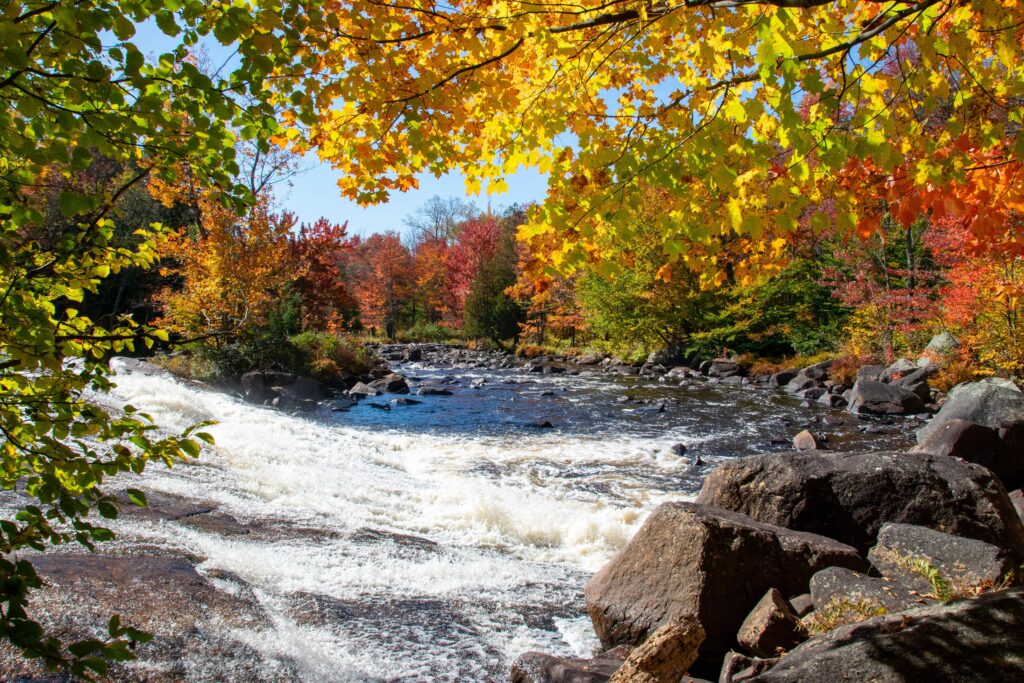
Michigan’s Upper Peninsula opens the season here, usually in the last days of September in the west and through the first two weeks of October in the east. The northern Lower Peninsula follows in early October, and southern Michigan holds on until late October.
Northern Wisconsin peaks in late September, central Wisconsin in mid-October, and the southern tier of counties later that month. Minnesota starts along the North Shore and in the far north in late September before working south through October.
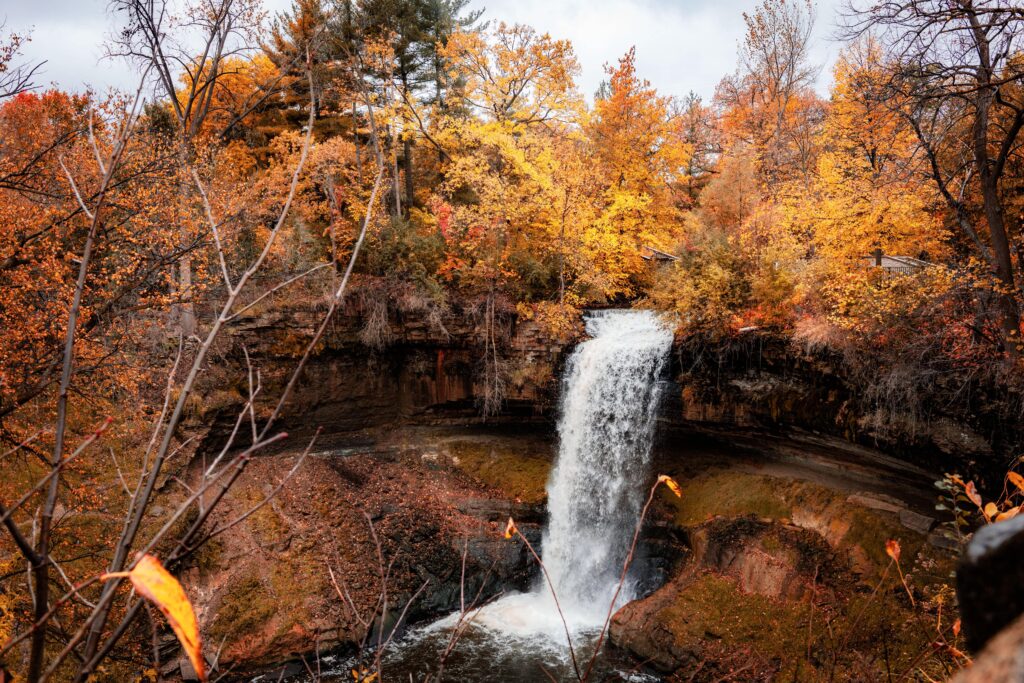
There are two progressions running at once here, and knowing both is what separates a good trip from a lucky one. Colour moves west to east across the UP, and it also moves from the interior outward toward the Great Lakes shorelines. Lake of the Clouds in the Porcupine Mountains, Tahquamenon Falls and Pictured Rocks are the anchors on the Michigan side. Door County and the Northwoods carry Wisconsin. The Boundary Waters and the North Shore carry Minnesota.
💡 Insider Tip: The Great Lakes shorelines run about a week behind inland forests at the same latitude, because the water moderates overnight temperatures. That gives you a genuine second chance: if you drive up to the Keweenaw or the Porkies and find the interior already past peak, head for the Lake Superior or Lake Michigan shore rather than driving home.
Northern New England: Late September to Mid-October
This is the region that draws roughly ten million leaf-peepers a year, so it is also the one where booking late costs you the most.
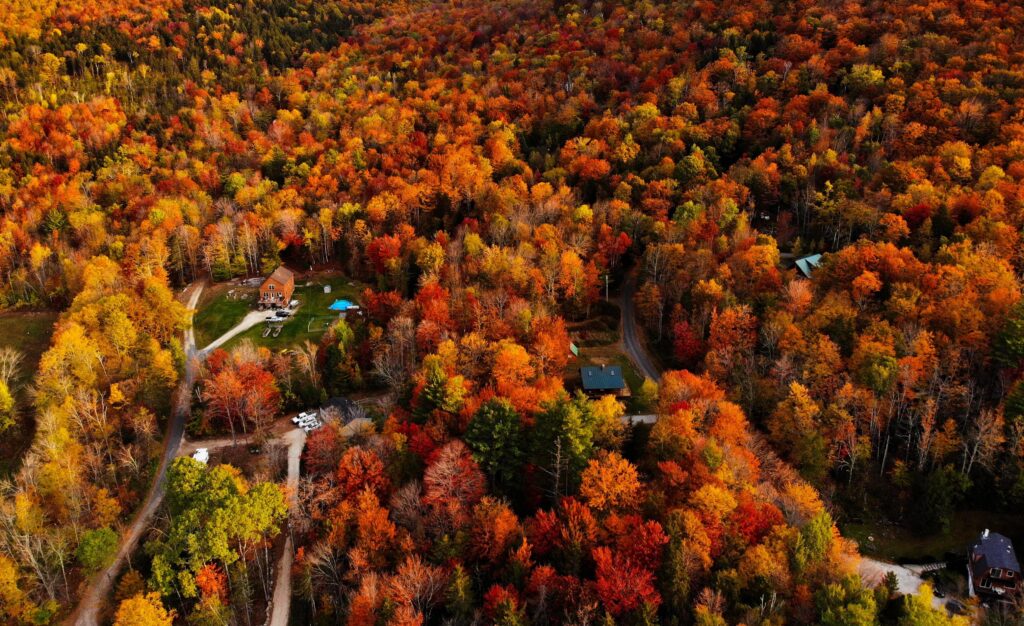
- Late September: northern Maine, New Hampshire’s Great North Woods, and Vermont’s Northeast Kingdom.
- First two weeks of October: the White Mountains, including the Kancamagus Highway, Franconia Notch and Mount Washington Valley, plus central Vermont and the Champlain Valley.
- Mid to late October: New Hampshire’s Lakes Region and Monadnock, southern Vermont, and coastal and southern Maine.
Vermont breaks into four regions that peak on their own schedules, which is genuinely useful if your dates are fixed. Northern Vermont around Stowe and Mount Mansfield goes earliest, usually late September into the first week of October. Central Vermont around Killington and the Mad River Valley follows in early to mid-October. Southern Vermont around Manchester and Mount Snow is typically mid to late October. The Northeast Kingdom is the quietest of the four and the first to turn.
If you want to build a trip around it rather than just drive it, the 12 best fall hikes in Vermont are organised by region for exactly this reason, so you can pick a trail that matches whichever week you are able to travel.
Pacific Northwest: Early October to Early November
The Northwest runs two fall seasons, and they are three weeks and 4,000 feet apart.
The first is larch season. Western and alpine larch are deciduous conifers: the needles turn gold, then orange, then drop. They are generally at their yellow best for the first two weeks of October and go more orange as Halloween approaches. The highest passes on the WA-20 corridor, including Maple Pass, Cutthroat Pass and Easy Pass, tend to run from late September to around 12 October and start dropping needles by mid-month. Slightly lower trails such as Blue Lake and Cutthroat Lake hold from roughly 1 to 15 October. If you are flying in for one window, 3 to 12 October covers the most ground.
The second is the lowland maple and vine maple season, which peaks in the Cascades and Olympics in mid to late October and holds into early November in the coastal valleys. Oregon’s season is centred on October, with mid-month usually the brightest, and Mount Hood, the Willamette and Deschutes national forests and the Columbia River Gorge carrying most of it. If you are already heading to central Oregon for the colour, the waterfalls near Bend are running well in October and pair naturally with a larch day.
💡 Insider Tip: The North Cascades trailheads sit on Forest Service land rather than inside the national park, so you need a Northwest Forest Pass ($5 for a day, $30 annual) even though the park itself charges no entrance fee. Bring it with you: the lots have no reliable cell signal for buying one on arrival, and on peak October weekends the Blue Lake and Colchuck lots can fill before 5:30am.
Sierra Nevada and Northern California: Late September to Early November
California’s colour is more monochromatic than New England’s, but its elevation range is enormous, which means somewhere in the state has colour from early September to late November.
The Eastern Sierra is the headline act, usually peaking from late September to mid-October depending on elevation. Bishop Creek Canyon is the deepest concentration, with aspens thickening as you climb toward South Lake and North Lake. The June Lake Loop puts roadside aspens right on the water at Silver Lake. Lundy Lake north of Lee Vining sits inside a large aspen grove, and Rock Creek Road runs in and out of groves the whole way up to Mosquito Flat.
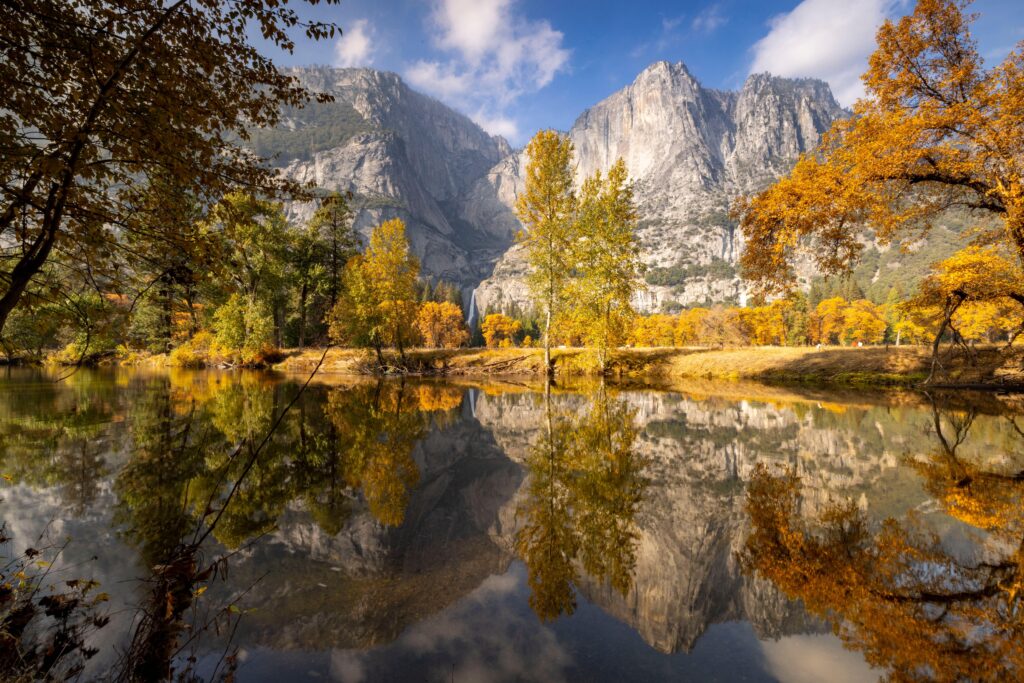
Lower down, Yosemite Valley and the wine country of Napa and Sonoma run from October into early November. That is worth knowing if your dates are late: the high country will be finished, but the valley floors will not be.
Mid-Atlantic and Southern New England: Mid to Late October
The third week of October is the anchor for most of this region. The Catskills and Hudson Valley generally peak mid-month, Pennsylvania mid to late October, and coastal Connecticut and Rhode Island often hold on until late October or early November.
Shenandoah National Park splits by elevation like the Smokies do, just over a narrower range. Colour develops above 3,500 feet in early October, and the display usually reaches peak at mid and lower elevations in the third week of October. The park is busiest during the last three weeks of the month, and Skyline Drive on an October Saturday is bumper to bumper.
💡 Insider Tip: For an early October visit to Shenandoah, concentrate on the Central District between the Thornton Gap and Rockfish Gap entrance stations. That is where the park’s highest ground is, so it is where colour appears first. Arriving in the first week and driving the northern end instead is the single most common way to miss the show by a fortnight.
Southern Appalachians: Early October to Early November
This region has the longest fall season in the eastern US, and it is not close. Great Smoky Mountains National Park spans roughly 875 feet to over 6,600 feet, and colour takes six to eight weeks to travel from the summits to the valley floors.
- Above 4,000 feet: starts changing in mid-September, peaks in the first two weeks of October. Kuwohi (renamed from Clingmans Dome in 2024), Newfound Gap, Chimney Tops, Mount Le Conte.
- 2,500 to 4,000 feet: mid to late October, and this is usually the best of the whole season. Sugar maple, scarlet oak and hickory come in alongside the yellow birch and beech still holding on higher up. Roaring Fork, Cataloochee Valley.
- Below 2,500 feet: late October into early November. Cades Cove, Deep Creek, Big Creek, Elkmont, Oconaluftee, and the towns around the park entrances.
Newfound Gap Road climbs from about 1,400 feet in Gatlinburg to 5,046 feet at the state line, which means a single drive in mid-October will show you three stages of the season at once. Further up the Blue Ridge Parkway, the North Carolina sections near Asheville peak late October into early November. There is a genuine advantage in that: because the southern Appalachians peak later than New England, a lot of travellers have already stopped looking, and the roads are more manageable at peak than you would expect.
The high ground around Boone and Grandfather Mountain peaks earlier than Asheville does, usually in the middle of October, and the best hikes in Boone NC cover which of those trailheads are open and which Parkway sections are still under repair. Chasing water rather than ridgelines works well here too, since the waterfalls near Chattanooga sit low enough to hold colour into November.
The Southwest: Late September to Mid-November
The Southwest has two entirely separate displays. High-country aspens go in September, and the desert canyons follow six to eight weeks later.
In New Mexico, the Aspen Vista Trail near Ski Santa Fe is the region’s signature autumn hike, with gold running across the Sangre de Cristo range. The Enchanted Circle Scenic Byway through Taos, Questa, Angel Fire and Eagle Nest is the classic drive, and the High Road to Taos and the Sandia Crest Byway, the highest paved scenic drive in the Southwest, both deliver without much walking. Further south, the Sunspot Scenic Byway and the Cloudcroft area in the Sacramento Mountains mix aspen, maple and oakbrush.
In Arizona, Snowbowl Road and the Inner Basin Trail in the San Francisco Peaks near Flagstaff are the aspen strongholds. And at the tail end of the season, the southern edges of Arizona and New Mexico can still be peaking in mid-November.
Utah’s canyon country is the other late option. Zion’s cottonwoods along the Virgin River typically turn gold from late October into early November, set against sandstone that is red year-round, which is a colour combination you will not find anywhere else on this list.
💡 Insider Tip: New Mexico’s own tourism office gives the best advice on the Southwest: pick your travel dates in advance, but not your destination. Aspen colour there lasts about a week in most places and is difficult to forecast, so the reliable play is to lock in the week, keep the route flexible, and drive to wherever the colour actually is when you arrive.
The Ozarks and Mid-South: Late October to Early November
The Ozarks generally peak through October, with the hardwood hollows of Arkansas and southern Missouri at their best in the second half of the month. Kansas deciduous forests tend to peak around the end of October and into the first week of November.
This is an underrated stretch of the country for foliage, largely because nobody markets it. If your dates land in the last week of October and New England is done, the Ozarks are usually just arriving.
Texas Hill Country and the Deep South: November
The last colour in the lower 48 is in Texas and Louisiana. Lost Maples State Natural Area holds an isolated stand of bigtooth maples that typically colour through the first half of November, and the Texas red oaks that dapple the surrounding Hill Country normally change during the last weeks of the month. Garner State Park to the south often does not peak until at least mid-November, and Kisatchie National Forest in Louisiana runs mid to late November.
Be realistic about Lost Maples. It is a small park with a single canyon of maples and it is the only show in Texas, so November weekends there are genuinely crowded. The park’s own foliage reports have long asked visitors to come midweek where possible, and that advice still holds.
What 2026 Is Shaping Up to Look Like
Treat all of this as forecast rather than fact. Late-summer and early-autumn weather decides the outcome, and it has not happened yet.
Most of the country is expected to see a near-average season in 2026, which sounds underwhelming and is actually good news. Average is the condition that produces the display people drive six hours for. It is the extremes, drought or a warm wet autumn, that dull the palette.
Colorado is the notable exception. A light snowpack and a warm summer point to an earlier-than-average peak, particularly at altitude, and drought-stressed aspens can drop their leaves quickly if a high-wind event arrives in the second half of September. If you are planning a Colorado trip, bias your dates earlier than you normally would and keep the route flexible.
New England forecasters are calling for a slightly later, slower-burning season, with northwest Maine around the last week of September and Groton State Park in Vermont plus the higher northern White Mountains in the first week of October. One widely quoted 2026 estimate puts Vermont’s statewide peak around 9 October.
How to Time the Final Two Weeks
Use two different classes of tool at two different stages, because they are good at different things.
- Booking stage, two to six months out: national maps. The Old Farmer’s Almanac map shows historical averages by region, which is what you want when you are choosing a week. SmokyMountains.com and Explore Fall both run national prediction models with daily updates.
- Trip stage, ten to fourteen days out: state and regional trackers, which are far more accurate. The Wisconsin Department of Tourism publishes county-level colour percentages. Michigan’s Upper Peninsula travel association posts regional reports. Colorado Parks and Wildlife publishes weekly reports through September. CaliforniaFallColor.com is the reference for the Sierra. Vermont, New Hampshire and Maine all run state trackers from late September.
One caution on judging colour yourself. Trees at forest edges and along roadsides turn first, because they get more sun than the interior does. That means a highway drive can look like peak colour a full week before the forest you are actually going to hike through gets there. Do not call it from the car.
What to Pack for a Fall Colour Trip
Autumn trips fail on two things more than any other: temperature swings and daylight. In the mountain West a 30 to 40 degree spread between dawn and midday is normal in late September, and by mid-October you are losing daylight fast enough that a leisurely afternoon start turns into a headlamp descent.
- A wind shell and a mid-layer, even on a forecast that looks mild. Exposed summits and high passes run far colder than the valley reading.
- A headlamp in every day pack. This is the single most-skipped item on autumn day hikes.
- Traction if you are going high. Larch trails on WA-20 and the alpine ridges in New England can hold ice in shady gullies by mid-October.
- A polariser if you are shooting. It cuts glare on wet rock and lake surfaces, which is what usually flattens foliage photos.
Fall Hiking Kit Worth Packing
A lightweight wind shell, a warm hat and a headlamp cover most of what goes wrong on an October day hike. None of it is expensive and all of it fits in a day pack.
If your boots are new, or borrowed, or have not been out since spring, it is worth reading how hiking boots should fit before a long descent on wet leaves. Foliage season is prime blister season for exactly that reason.
Check these hiking essentials before your trip (paid links):
- A hiking day backpack
- Comfy pair of men’s boots, or woman’s hiking boots
- Hiking water bottle for hydration
- A cozy men’s and woman’s raincoat / windbreaker for those gusty summits
- A set of hiking poles
Where to Base Yourself
Three bases that put you inside a peak window rather than a two-hour drive from one. Book early for all three: foliage weekends in these towns sell out months ahead.
- Stowe, Vermont for northern New England. Peak is usually late September into the first week of October, and Mount Mansfield, Smugglers’ Notch and the Worcester Range are all within half an hour.
- Asheville, North Carolina for the Blue Ridge. Peak runs late October into early November, later than most people assume, with the Parkway on the doorstep.
- Crested Butte, Colorado for the Rockies. Late September, with Kebler Pass starting at the edge of town.
Find a Base for Peak Week
Foliage-season lodging in these towns books out early, and prices climb steeply in the final month. Comparing across booking sites in one search is the quickest way to see what is genuinely left.
Compare stays in Stowe, Asheville and Crested Butte
One Last Piece of Planning Advice
Book the week, not the weekend. Peak colour lasts one to two weeks in any given spot, weather can shift it by ten days in either direction, and a Saturday-only trip gives you no room to adapt. If you can build in two flexible days and a willingness to drive an hour uphill or downhill, you will catch peak colour far more often than the people who booked a specific date in March.
If you would rather build the trip around a destination than a date, the 9 most stunning national parks for fall colors covers where the display is best and what you need to reserve, and the best national parks on the East Coast is a good starting point if you are staying east of the Mississippi.
Frequently Asked Questions
When is peak fall foliage in the US?
For most of the country, peak fall colour arrives during October. Some higher-elevation and northern areas peak in September, while the southernmost states hold off until mid-November. The single most reliable week nationally is the first or second week of October, when the Upper Midwest, northern New England, the Rockies and the North Cascades are all at or near peak at the same time.
Which US region has the longest fall color season?
The Southern Appalachians. Great Smoky Mountains National Park spans roughly 875 feet to over 6,600 feet of elevation, and colour takes six to eight weeks to move from the highest summits down to the valley floors. That gives you a usable window from mid-September through early November depending on which elevation you target.
How long does peak color last in one place?
About one to two weeks, and less if you get a windy or heavy rain event. That is why picking a flexible window works far better than picking a single date, and why elevation changes are so useful once you are on the ground.
Does a dry summer ruin the fall colors?
It can shorten the season rather than mute it outright. Drought stress causes trees to drop leaves earlier and faster, so a dry summer usually means an earlier peak that does not last as long. A prolonged wet stretch tends to produce duller colour and a later change, and a hard freeze turns leaves brown quickly.
Where does fall color start first in the United States?
In the lower 48, the earliest reliable colour is in the Colorado high country above 10,000 feet, which starts turning in mid-September, alongside the highest elevations of the Great Smoky Mountains. Northern Maine, New Hampshire’s Great North Woods and Vermont’s Northeast Kingdom follow in the last week of September.
How far in advance should I book a fall foliage trip?
For northern New England, six to eight months is not excessive, since roughly ten million people travel there for foliage each year and the popular towns sell out. For the Rockies, the Upper Midwest and the Southern Appalachians, two to three months is usually enough. Wherever you go, book lodging early and stay flexible on which specific trails or drives you do.