

6 Of The Best Cold Weather Sleeping Bags – A Comprehensive Buyers Guide!
The right cold-weather sleeping bag is the difference between a night you enjoy and a night you endure. The wrong one leaves you awake at 3am no matter how good your tent is. The catch is that temperature ratings are the most misleading number in camping gear: a bag stamped “0°F” from one brand and “0°F” from another can be twenty degrees apart in real comfort. Below are six bags that are all currently available, ordered strongest first, with the honest temperature you can actually expect from each.
A bag is only one part of a warm sleep system, so it is worth reading how to stay warm in a tent, how to insulate a tent for winter camping, and which thin gloves handle extreme cold before your next trip.
Quick comparison
Ratings are manufacturer, ISO, or survival figures as noted. Check current specs and prices directly when shopping.
The best cold-weather & winter sleeping bags
These four are the sub-freezing performers: mummy bags with hoods, draft collars, and insulation that actually holds up when it gets cold. If you camp when it is genuinely cold, buy from this group and pair the bag with an insulated pad (R-value 4 or higher), because a cold pad will undo a warm bag.
1. Kelty Cosmic Down 20: Best Overall

A long-running favorite with 550-fill DriDown that keeps lofting even when damp. The best all-round pick for three-season and cold-shoulder-season camping.
The strongest all-rounder here and a genuine long-running favorite. It uses 550-fill DriDown, so the insulation keeps lofting even when the air is damp, and the trapezoidal baffles keep that down evenly spread instead of drifting to the edges where it stops working. A full draft collar and draft tube seal the warmth in. Worth being straight about the name: despite the “20” badge, its ISO comfort rating is about 31°F, so treat it as a strong three-season bag that handles the cold end of spring and the hard end of fall.
Temp: 20°F rating (ISO comfort ~31°F, limit ~21°F) · Fill: 550-fill DriDown · Weight: ~2 lb 7 oz (regular) · Shape: mummy · Sizes: short / regular / long
- Down warmth with water-resistant DriDown treatment
- Trapezoidal baffles stop cold spots forming
- Recycled shell and PFAS-free DWR
- Con: the “20°F” name oversells it, so plan around ~31°F comfort
2. Kelty Cosmic Synthetic 0°F: Best True Winter Bag

A four-season synthetic bag built for cold and damp conditions. Real sub-freezing warmth without the price tag of down, and it keeps insulating when it gets wet.
If you actually camp below freezing, this is the one to buy. Kelty builds the Cosmic 0° as a four-season synthetic bag made for cold and damp conditions, and synthetic fill is the right call for winter in wet climates because it keeps insulating when it picks up moisture. You also skip the price premium of a down bag at the same rating. A zippered stash pocket keeps a phone from dying overnight, and the roomy footbox means your feet aren’t pinned flat all night.
Temp: 0°F · Fill: CirroLoft ECO synthetic (recycled) · Shape: mummy · Sizes: regular / long · Note: buy the 0°F option, not the 20°F or 40°F
- Genuine four-season, sub-freezing bag
- Synthetic fill keeps working when damp
- Cheaper than a down bag at the same rating
- Con: bulkier and heavier than down, so better for car camping than long carries
3. TETON LEEF 0°F: Best Budget Cold-Weather Bag

An Amazon's Choice cold-weather mummy cut four inches wider than the standard, so you get the warmth without the shrink-wrapped feeling. Strong value with a lifetime warranty.
Around $90, Amazon’s Choice, and rated 4.5 stars across roughly 589 buyers. TETON cuts the LEEF about four inches wider than the industry standard, which solves the usual mummy-bag complaint of feeling shrink-wrapped, and it still compresses into the included sack for backpacking. Read the rating carefully though: TETON publishes survival temperatures, not comfort temperatures, and tells buyers to add 20 to 30 degrees for actual comfort. So treat this 0°F bag as comfortable in the 20s, which is still solid value.
Temp: 0°F survival (comfortable ~20–30°F) · Fill: PolarLite synthetic · Shape: mummy, oversized cut · Sizes: short / regular / long · Note: buy the 0F variant
- Roomier than a standard mummy, about 4 inches wider
- Strong value with a lifetime warranty
- Compression sack included; packs down for backpacking
- Con: survival-rated, so the real comfort range is well above 0°F
4. Amazon Basics 20°F Cold Weather Mummy: Cheapest Way In

The cheapest credible cold-weather bag here. A simple synthetic mummy with a drawstring hood and anti-snag zipper, and it is almost always in stock.
Around $52 and about as reliably in stock as anything on Amazon, which matters more than it sounds when winter bags sell out every spring. It is a simple synthetic mummy with a drawstring hood, a brushed tricot liner that feels warm against skin, and an anti-snag zipper. No frills and no down, but if you camp a few cool weekends a year and do not want to spend real money, this does the job.
Temp: 20°F · Fill: synthetic (hollow fiber) · Shell: polyester, brushed tricot liner · Shape: mummy · Size: 82 x 33 in
- The cheapest credible cold-weather bag here
- Extremely reliable availability
- Anti-snag zipper and adjustable hood
- Con: basic build; realistically a three-season bag, not a winter one
Best double sleeping bags for cool-weather camping
These two are roomy, comfortable, and cheap, which makes them ideal for car camping and couples in spring, summer, and cool autumn nights. Be clear-eyed about the ratings: neither is a true sub-freezing winter bag. For genuine cold, stick with the four above.
5. MEREZA Double Sleeping Bag: Best for Couples & Car Camping

Roomy enough for two, this queen-size double sleeping bag is built for couples who don't want to sacrifice comfort on the trail. It handles everything from chilly cold-weather nights to warm summer camps, and the included pillows and compression sack make it easy to pack down and carry on any hiking, backpacking, or road-trip adventure. A solid all-rounder if you want one bag that works across seasons.
A queen-size double that splits into two singles or opens flat into two blankets, which makes it the most flexible pick here for couples who car camp. It bundles two pillows and a compression sack, and it is machine washable, which is rare at this price. Treat it as a cool-weather bag rather than a winter one and it earns its keep.
Temp: ~30°F+ (cool, not cold) · Fill: synthetic 400 GSM · Weight: ~7 lb · Shape: rectangular double · Size: 90.6 x 61 in
- Multi-use: one double, two singles, or two open blankets
- Water-resistant shell; good for damp, lakeside sites
- Two pillows and a compression sack included; machine washable
- Con: comfort limit around freezing, so not for true winter
6. Sleepingo Double Sleeping Bag: Best Budget Double
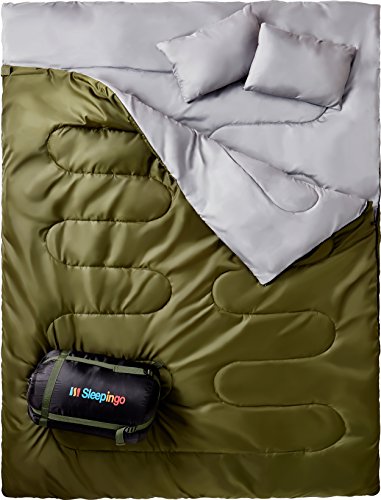
One of Amazon's most-reviewed double bags. Lighter than most doubles, splits into two singles, and includes two pillows. A budget pick for couples on mild-weather trips.
One of Amazon’s most-reviewed double bags, with tens of thousands of ratings behind it. It is lighter than most doubles and converts into two singles, which makes it the more portable of the budget doubles. Same caveat as the MEREZA: it is a mild-weather bag, best around 50°F and up. Pair it with a couple of backpacking pillows if you want to travel lighter.
Temp: ~50°F comfort (~35°F survival) · Fill: synthetic · Weight: ~5–6 lb · Shape: rectangular double · Size: 87 x 59 in
- Very highly rated by a huge number of buyers
- Splits into two individual bags; two pillows included
- Lighter than most doubles
- Con: survival-rated ~35°F, so comfort sits well above freezing
Buyer’s guide: choosing a cold-weather sleeping bag
Four things decide whether a bag keeps you warm: the temperature rating (and how honestly it was measured), fill type, fit, and the draft features.
Temperature ratings: comfort vs survival
This is where most people get burned. Bags tested under EN/ISO 23537 publish a Comfort rating (the lowest temperature a cold sleeper stays comfortable) and a Lower Limit (for warm sleepers). But plenty of brands publish a survival rating instead, which is the temperature at which the bag keeps you alive, not comfortable. TETON, for example, states plainly that you should add 20 to 30 degrees to their listed rating to get a comfort figure.
So the number on the label is not a promise. Buy a bag rated roughly 10°F below the coldest night you expect, favour bags that publish ISO comfort ratings, and add a bigger margin for anything sold on a survival rating. Remember a lower number means a warmer bag, so a 0°F bag is warmer than a 20°F bag.
Down vs synthetic fill
Down (measured in fill power, e.g. 550 to 800) gives the best warmth-to-weight and packs smallest, but it costs more and struggles when wet unless it is treated, as with DriDown or other hydrophobic finishes. Synthetic is heavier and bulkier but keeps insulating when damp and costs less, which makes it the smarter buy for wet climates, winter car camping, or a first cold-weather bag.
Draft collars and hoods
A draft collar is an insulated baffle around the neck that seals warm air inside the bag; a draft tube runs along the zipper to stop cold spots. Bags rated around 20°F and colder usually include both, plus a cinchable hood. On a genuinely cold night, these features matter more than a few degrees on the rating label.
Do not forget the pad
Much of your heat loss goes straight into the ground, so a warm bag on a thin pad will still leave you cold. Use an insulated pad with an R-value of 4 or higher for sub-freezing nights. Pairing a mid-range bag with a good pad beats an expensive bag on a bad one.
What about true expedition bags?
If you are planning genuine sub-zero expeditions, at -20°F and below, none of the bags here are the answer. That category belongs to specialists like Western Mountaineering, Feathered Friends, Rab, and Nemo, and you should expect to spend $500 and up, often through outdoor retailers rather than Amazon. For the winter camping most weekend campers actually do, a 0°F bag plus a good pad and a liner covers it.
How much should you spend?
A capable cold-weather synthetic bag starts around $50 to $90. Quality down bags in the 20°F range run roughly $150 to $200. True extreme-cold expedition bags start around $500. Spending more mostly buys you lower weight and better packability, not necessarily more warmth.
Frequently asked questions
What temperature rating do I need for winter camping?
For sustained sub-freezing nights, look for a 0°F bag, and check whether that number is an ISO comfort rating or a survival rating. Add a 10°F buffer and use an insulated pad, because the bag is only half of a winter sleep system.
Why do two bags with the same rating feel so different?
Because they are often measuring different things. An ISO comfort rating and a survival rating can be 20 to 30 degrees apart on the same label number. Always check which one a brand is quoting before you trust it.
Is down or synthetic better for cold weather?
Down is warmer for its weight and packs down smaller, so it wins for backpacking. Synthetic keeps insulating when damp and costs less, so it wins for wet climates, winter car camping, and tight budgets. Treated down like DriDown splits the difference.
Are sleeping bags waterproof?
No. Most have a water-resistant shell (DWR) rather than a waterproof one. Hydrophobic or treated down resists moisture better, and synthetic keeps insulating even when damp. If you expect wet conditions, read our camping-in-the-rain hacks.
Can a double sleeping bag work in cold weather?
Two people share body heat, which helps, but budget doubles are built for comfort and space rather than sub-freezing warmth. For genuinely cold trips, two cold-rated mummy bags will out-perform a single double.
Which of these bags should I buy?
For most campers, the Kelty Cosmic Down 20 is the best balance of warmth, weight, and price. Camping below freezing? The Kelty Cosmic Synthetic 0°F. Want cold-weather warmth on a budget? The TETON LEEF 0°F. Just need a roomy bag for cool-weather car camping with a partner? The MEREZA double.
